
Subalpine cow-wheat
Melampyrum subalpinum
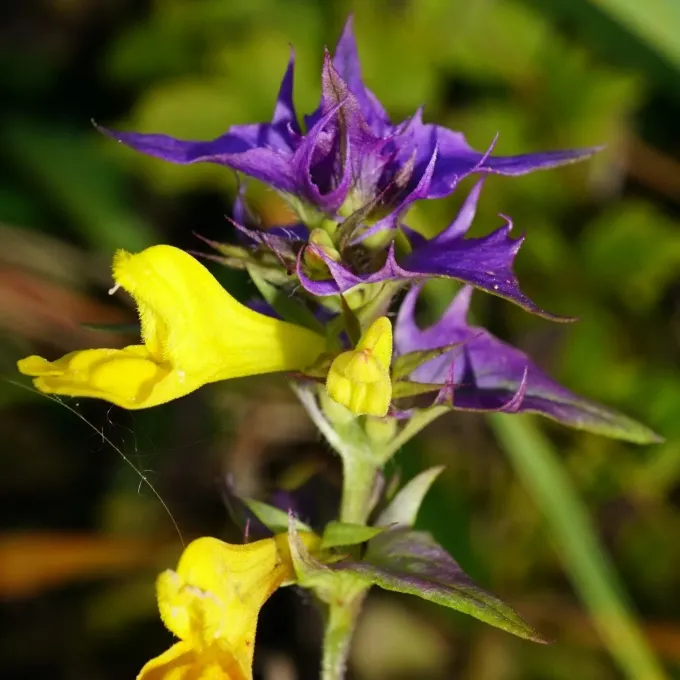
Description
Growing requirements
Subalpine cow-wheat (Melampyrum subalpinum) is an herbaceous annual plant belonging to the Orobanchaceae family. Unlike conventional field crops, this plant functions as a hemi-parasite, relying on the root systems of surrounding vegetation to supplement its water and nutrient uptake through specialized structures called haustoria.
The plant is native to subalpine regions, thriving in mountainous habitats where it integrates into the meadow ecosystem. These environments are defined by short growing seasons and intense climatic variability, which necessitates highly adaptive biological strategies from the local flora.
Regarding soil and site requirements, Subalpine cow-wheat prefers well-drained, porous soils that are characteristic of mountain slopes. It does not require high levels of fertilization; instead, its success is largely determined by the presence and density of appropriate host plants, such as various grasses and perennial herbs.
The cultivation of this plant for agricultural purposes is currently non-existent because of its complex nutritional requirements and its reliance on symbiotic-like interactions with host plants. It remains primarily an object of botanical interest and a natural component of high-altitude grasslands.
Understanding the ecology of this species is essential for managing natural mountain pastures. As a hemiparasite, it affects the growth dynamics of surrounding plants, which can indirectly influence the biomass production and species diversity of the entire mountain meadow community.