
Mayodendron igneum
Mayodendron igneum
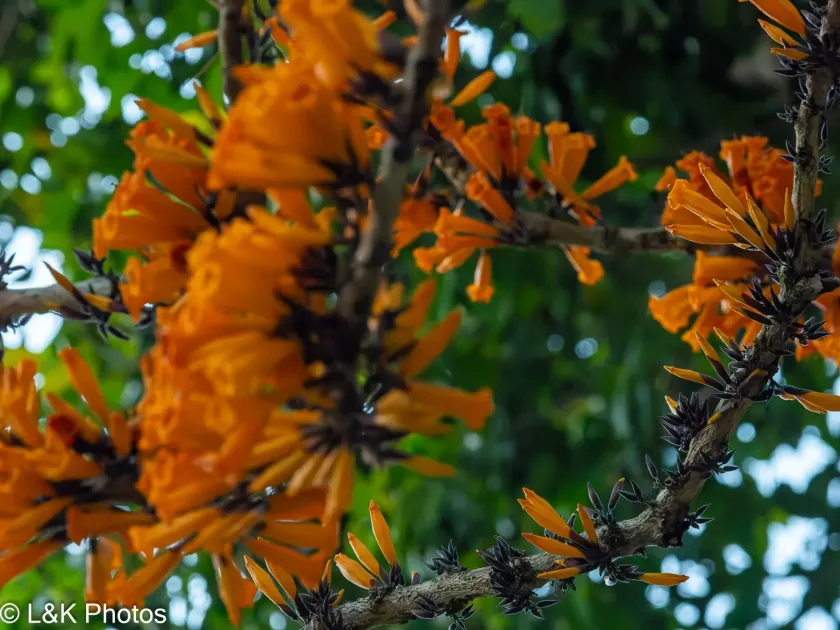
Description
Growing requirements
Mayodendron igneum belongs to the Bignoniaceae family and is recognized as a magnificent tropical tree known for its spectacular flowering that occurs directly on the woody parts of the plant.
The species is native to Southeast Asia, specifically Myanmar, Thailand, and China, where it thrives in warm, humid environments with defined seasonal changes.
Successful cultivation requires a location with full sunlight or partial shade and well-draining soil that is rich in organic matter to support rapid development.
Water management is critical; the tree requires significant moisture during the growing season but must be protected from waterlogged soils, which are detrimental to its root system.
From an agricultural standpoint, it is primarily used in landscaping and ornamental forestry, where it is prized for its ability to transform spaces with its vivid, fiery-colored blooms.
Main diseases and pests
The plant is susceptible to common tropical insect pests such as aphids and mealybugs, which tend to congregate on young foliage and tender stems during dry periods.
Fungal infections can become a major concern in high-humidity areas, especially if there is insufficient airflow within the canopy, leading to leaf blight or wilting.
Root rot, induced by poor drainage, remains the most frequent cause of mortality for this species when grown in unsuitable or overly compact clay soils.
Strategic pruning and canopy thinning are essential practices to ensure light penetration and air circulation, which significantly lower the incidence of fungal pathogens.
Integrated pest management, including regular scouting and the application of horticultural oils, is recommended to keep the tree population healthy and vigorous.