
Maurocenia frangula
Maurocenia frangula
Description
Growing requirements
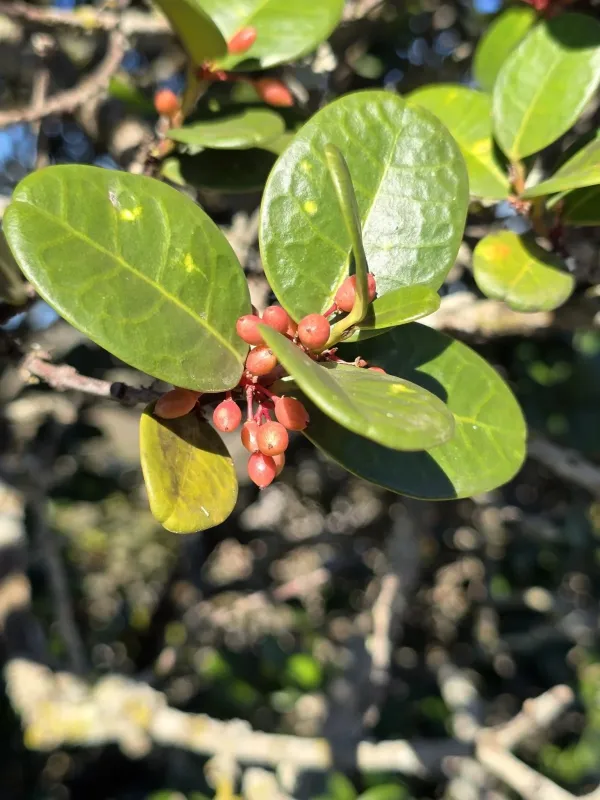
Maurocenia frangula, commonly known as the Hottentot cherry, is a perennial evergreen shrub belonging to the Celastraceae family. It is a monotypic genus that stands out for its structural beauty and dense, dark green foliage.
This species is native to the Cape region of South Africa. It thrives in mediterranean-like conditions, benefiting from distinct seasonal changes while maintaining its lush appearance throughout the year due to its leathery leaves.
From a botanical perspective, the plant produces small, inconspicuous flowers which eventually develop into edible, red drupes. Its growth rate is generally slow to moderate, making it a stable component in any landscape design.
Successful cultivation requires soil that is rich in organic matter but exceptionally well-drained. Maurocenia frangula prefers locations with bright, indirect sunlight, although it can tolerate full sun once the root system is well-established.
Agrotechnical maintenance focuses on providing consistent irrigation during the first two years of growth. After establishment, the plant is relatively drought-tolerant, but mulch application is recommended to maintain soil moisture levels and protect roots from extreme temperatures.
Main diseases and pests
The primary threats include fungal pathogens affecting the root system when drainage is inadequate. Typical pests that may affect this plant include scale insects and spider mites, particularly in environments with poor air circulation or prolonged drought stress.
Harvesting
In terms of agricultural and horticultural utility, Maurocenia frangula is primarily cultivated for ornamental purposes. It is frequently employed in formal gardens, hedges, and as a backdrop plant because of its year-round evergreen foliage and compact habit.