
South American sapote
Matisia cordata
Description
Growing requirements
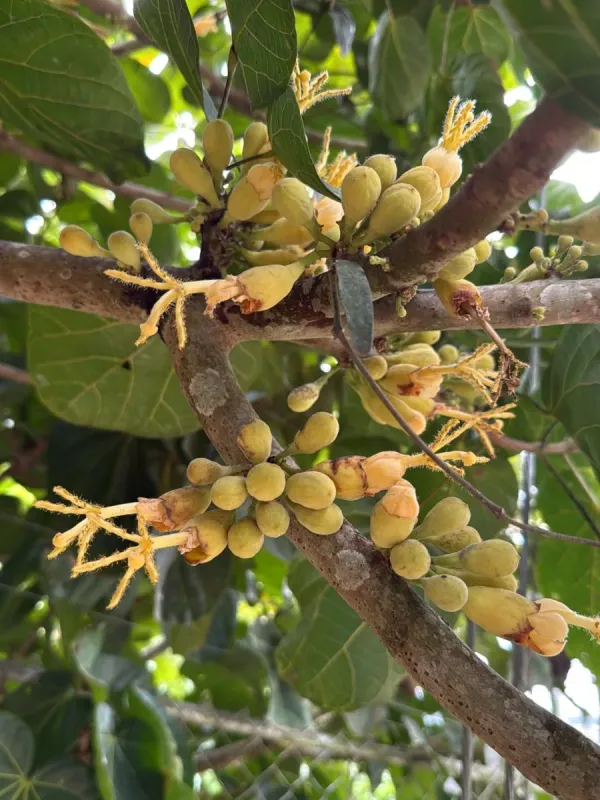
The South American sapote (Matisia cordata), also known as chupa chupa, is a tropical fruit tree belonging to the Malvaceae family. Native to the rainforests of the Amazon basin and the Andean foothills, it thrives in warm, humid environments.
The tree requires a tropical climate with consistent temperatures throughout the year, ideally ranging from 22°C to 28°C. It is highly intolerant of frost and cold winds, which can cause severe damage to the foliage and younger branches.
Cultivation requires deep, well-draining soils rich in organic matter. While the tree appreciates moisture, it cannot tolerate waterlogged conditions, which are detrimental to the health of the superficial root system.
Botanically, the tree is recognized by its large, heart-shaped leaves and dense, evergreen canopy. It can grow up to 25 meters in its native habitat, providing significant shade for understory plants in agroforestry settings.
For optimal development, the tree requires consistent air humidity. In agricultural settings, it is essential to ensure that the site is protected from strong winds while maintaining good airflow to prevent disease accumulation within the foliage.
Yield
The fruit of the South American sapote is highly valued for its sweet, creamy, orange-colored pulp. It is widely used in its fresh form, as well as in beverages, smoothies, and processed fruit products such as preserves.
Productivity increases significantly as the tree matures, with mature specimens capable of producing large quantities of fruit annually. The harvest period can be extended through proper irrigation and balanced fertilization programs.
Main diseases and pests
Disease management is centered on preventing fungal infections caused by high humidity. Ensuring proper spacing between trees helps improve ventilation, reducing the risk of pathogens settling on the leaves.
Pest pressures often include sap-sucking insects such as aphids, mealybugs, and scale insects. These pests can weaken young trees and affect fruit set, making integrated pest management essential for healthy commercial orchards.
Harvesting
Harvesting is typically done by hand, selecting fruit that has reached the appropriate stage of maturity. Proper handling post-harvest is crucial, as the ripe fruit is relatively soft and susceptible to bruising during transport.