
Marila racemosa
Marila racemosa
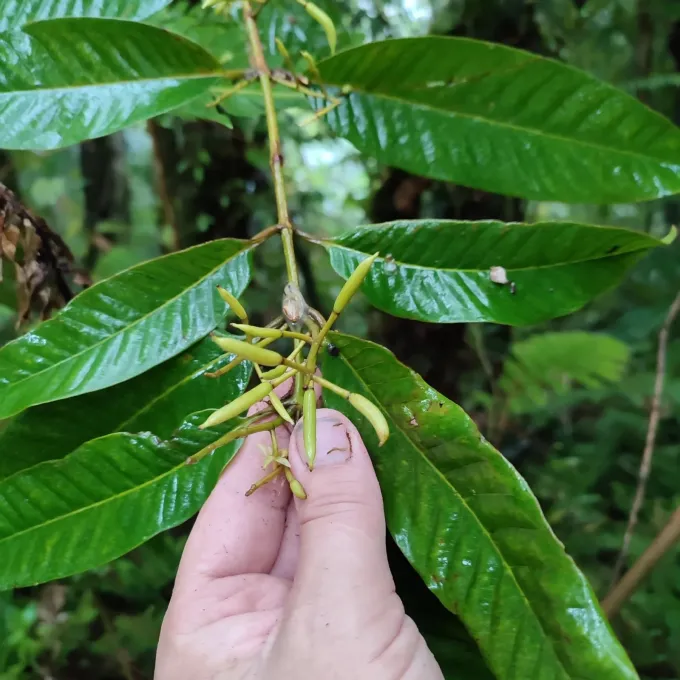
Description
Growing requirements
Marila racemosa is a member of the Calophyllaceae family, a group of woody plants primarily found in tropical habitats. This species acts as a typical forest-dwelling tree, preferring the humid conditions found within its native range.
The climate requirements for this plant are centered on tropical thermal stability. It thrives in regions with consistently warm temperatures and high annual rainfall, making it highly sensitive to extreme cold or prolonged arid conditions.
In terms of soil, this plant demands well-drained, nutrient-rich environments. The presence of organic matter and proper oxygenation in the soil profile is essential to prevent root asphyxiation, especially during periods of heavy tropical rain.
Botanically, the species is recognized by its distinct raceme inflorescences, from which the specific epithet racemosa is derived. The foliage is typically leathery and arranged in an opposite pattern, allowing the plant to manage transpiration effectively.
Its natural distribution covers parts of the Caribbean and South America. While it is not a widespread agricultural commodity, the species plays a vital role in local ecosystems by supporting pollinator populations and contributing to the forest structure.