
Giant macrocybe
Macrocybe gigantea (Massee) Pegler & Lodge
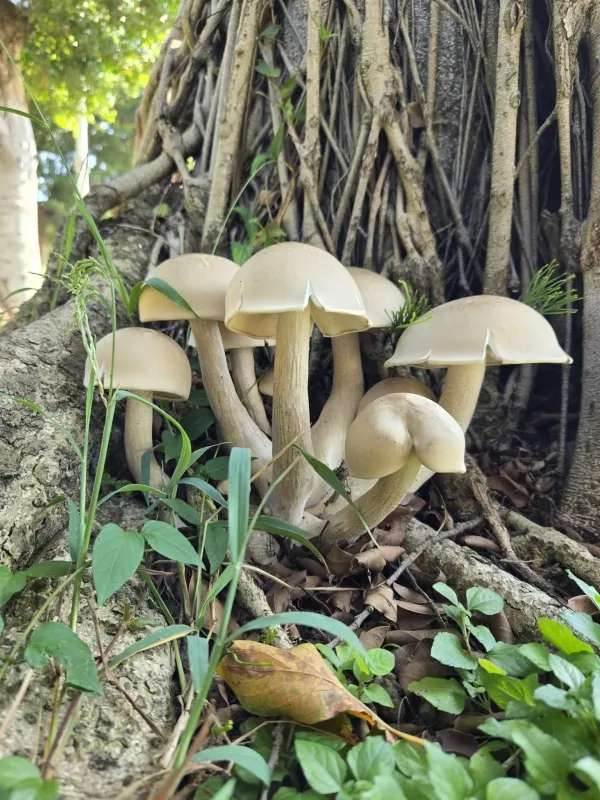
Description
Sowing dates
Giant macrocybe is a heat-loving crop, so planting times depend on the ability to maintain consistently high temperatures. In controlled indoor conditions, mycelium inoculation is performed when the substrate temperature reaches 25–30 degrees Celsius.
For successful colonization of the substrate, the mycelium requires an incubation period, which typically lasts from 3 to 5 weeks. It is essential to ensure a stable temperature regime without sudden fluctuations to prevent slow hyphal growth.
Under outdoor conditions or in greenhouses without intensive heating, planting is only possible during periods of sustained summer heat. The culture is extremely sensitive to cold stress, which can lead to a complete halt of biological processes.
Seed material preparation is carried out by introducing grain spawn into pre-prepared and sterilized substrate blocks. Maintaining sterility at this stage is a key success factor.
After the mycelium has colonized the substrate, a casing layer is applied, which promotes the formation of fruit bodies and maintains the required moisture level.
Growing requirements
This fungus belongs to the Tricholomataceae family and is a tropical species requiring high air and substrate temperatures for productive growth. The optimal temperature range for vegetation is 28–35 degrees Celsius.
Moisture requirements are high: both relative humidity and substrate moisture must be maintained at 80–90 percent. A lack of moisture leads to cap cracking and a halt in primordia development.
Nutrient substrates are based on cereal straw, deciduous wood sawdust, and organic nitrogen supplements. The substrate must undergo high-quality thermal treatment or pasteurization.
For intensive cultivation, good room ventilation at high humidity is necessary, which is a technically complex task for standard mushroom farms. Giant macrocybe requires intensive air exchange to remove excess carbon dioxide.
The lighting regime is not a critical factor for this species, but diffused light may contribute to more correct fruit body formation. Direct sunlight should be avoided to prevent overheating of the substrate.
Yield
Giant macrocybe is known for its impressive size: individual specimens can reach weights of over 20 kilograms with a cap diameter of up to 60–100 centimeters. This makes the species potentially very productive when following proper technology.
Yield depends on compost density and the depth of mycelium penetration. In professional mushroom farms, efforts are made to optimize substrate composition to obtain maximum biomass per unit area.
Fruiting occurs in "flushes," and the period between them requires careful maintenance and replenishment of the nutrient medium. Each subsequent flush is usually less abundant than the first.
Production efficiency is evaluated by biological efficiency, which shows the ratio of fresh mushroom weight to the weight of the dry substrate. For this crop, with the right approach, it can be quite high.
Due to the massive structure of the mushroom, even a small number of fruit bodies provides a significant weight of final product, which simplifies harvesting and reduces labor costs for processing each unit.
Main diseases and pests
The main threats during cultivation are bacterial infections that develop against a background of high temperature and humidity. This requires the use of high-quality and clean seed material.
The fungus is susceptible to infection by mold fungi, such as Trichoderma, which can completely destroy the substrate block before the mycelium reaches the surface. Prevention involves strict control of sterility during substrate preparation.
Typical pests include sciarid and phorid flies, which can lay eggs in the substrate. Insect larvae damage the mycelium and fruit body primordia, reducing the marketability of the product.
Mites can cause significant damage to the crop by eating delicate parts of the mycelium. Using filters on ventilation systems helps minimize the risk of pest introduction from the external environment.
- Bacterial rot
- Green mold
- Fungus gnat larvae
- Mites
- Nematodes
Harvesting
Harvesting is performed when the mushrooms reach technical maturity, when the cap becomes firm and takes on its characteristic shape, but has not yet fully opened to release spores.
Fruit bodies are cut at the very base with a sharp knife. It is important to avoid damaging the casing layer to prevent the development of rotting processes in the substrate.
Freshly harvested macrocybe mushrooms have a short shelf life due to their high moisture and nutrient content. Quick sale or processing immediately after harvest is recommended.
Transportation requires careful handling, as massive caps are prone to mechanical damage and bruising. Special containers with soft cushioning are used.
Product storage is carried out at a temperature of 2–4 degrees Celsius under controlled atmosphere conditions, which extends freshness for several days. For long-term storage, mushrooms are dried or frozen.