
Floating water-plantain
Luronium natans
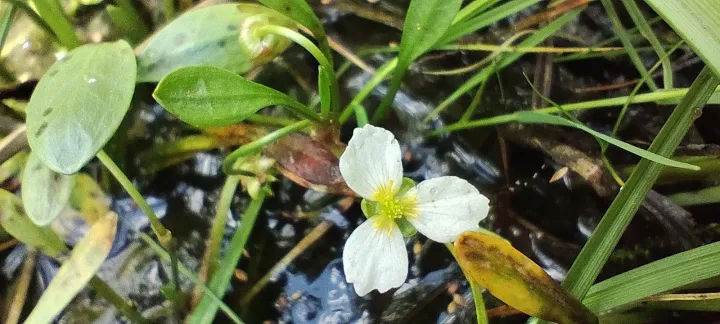
Description
Growing requirements
Luronium natans, commonly known as floating water-plantain, is a rare aquatic perennial belonging to the Alismataceae family. It is recognized as a specialty plant, primarily studied in the context of conservation biology and aquatic ecosystem management.
The plant originates from European freshwater systems, with a native range extending from Western Europe to Central regions. It thrives in oligotrophic lakes, pools, and slow-flowing rivers characterized by high water transparency.
Botanically, it features dimorphic leaves: submerged linear leaves and floating, oval-shaped leaves. This adaptation allows the plant to photosynthesize effectively across different depths and light conditions found in its natural habitat.
Optimal growth requires stable water levels and low nutrient concentrations. Nitrogen and phosphorus runoff from agricultural land can lead to detrimental effects, as the plant cannot compete with the rapid algae growth triggered by excess nutrients.
While not a traditional field crop, it holds significance in ecological restoration projects. Its cultivation is limited to controlled environments like botanical gardens or specialized aquatic nurseries aimed at preserving endangered aquatic flora.
Main diseases and pests
The main threat to Luronium natans is the eutrophication of natural waters. Nutrient runoff from nearby farming practices encourages dense algal blooms that physically shade the plant and reduce oxygen levels in the water column.
Pests such as aquatic snails and certain coleoptera species may graze on the young foliage. While usually manageable in wild settings, intense pressure from these herbivores can weaken the plant's structural integrity during the growing season.
Fungal diseases, particularly those related to sediment accumulation, pose a risk to the root system. Excessive organic matter leads to anaerobic conditions that promote pathogen development and hinder the uptake of essential minerals.
Invasive species represent a major challenge for the plant's survival. Faster-growing aquatic vegetation often smothers the floating water-plantain, preventing it from anchoring properly or reaching the surface for sunlight.
Environmental stressors including hydrological instability—such as extreme water level fluctuations—can lead to habitat fragmentation. These disturbances disrupt the delicate balance required for successful flowering and seed dispersal in late summer.