
Loxsoma cunninghamii
Loxsoma cunninghamii
Description
Growing requirements
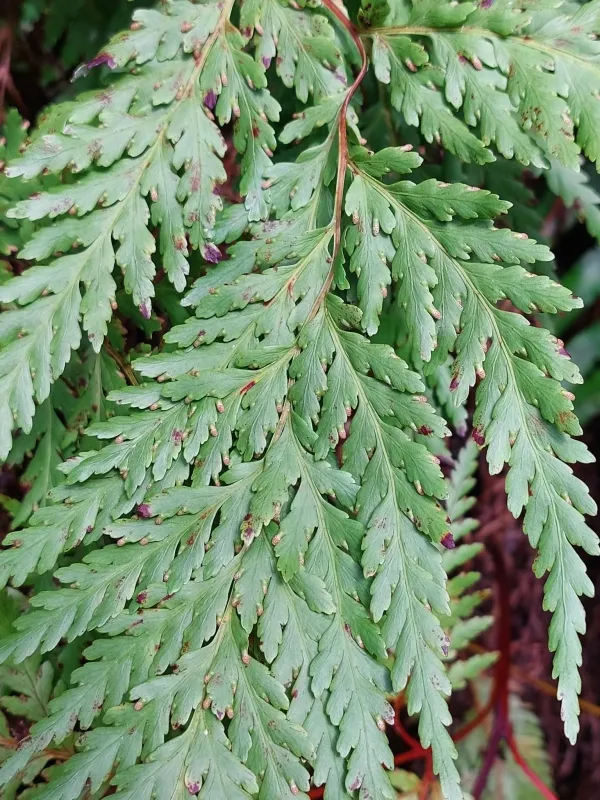
Loxsoma cunninghamii is the sole member of the Loxsomataceae family, representing a primitive lineage of ferns. Its morphology is highly distinct, featuring dichotomous leaf branching and unique cup-shaped indusia that protect the sporangia, marking it as a significant botanical specimen.
The plant is endemic to the North Island of New Zealand. It thrives in high-humidity environments, typically found in shaded forest gullies where atmospheric moisture remains consistently high throughout the year, protecting the foliage from desiccation.
For successful cultivation, the plant requires a specialized substrate rich in organic material, such as leaf mold mixed with coarse sand or perlite. Proper drainage is essential, as the rhizomes are sensitive to waterlogging and decay if the root zone remains stagnant.
Temperature management is crucial, as this fern does not tolerate frost or extreme heat. In ex-situ conditions, growers maintain temperatures between 15°C and 22°C, ensuring that the ambient humidity does not drop below 70%, which is vital for the health of its delicate fronds.
Loxsoma is not utilized in commercial agriculture; instead, it is primarily managed for conservation and research purposes. Botanists focus on propagation techniques through spores to preserve the species, as wild populations remain susceptible to environmental changes and habitat loss.