
Loeskeobryum brevirostre
Loeskeobryum brevirostre
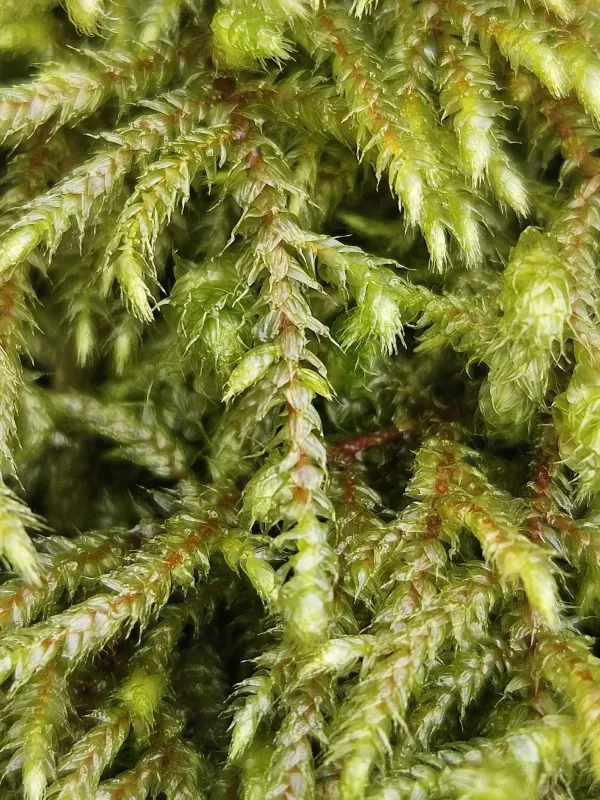
Description
Growing requirements
Loeskeobryum brevirostre is a robust moss belonging to the Hylocomiaceae family, typically recognized by its pinnately branched stems and its significant presence in forest ground layers.
This species thrives in mature, humid forest environments, favoring locations that provide consistent shade and protection from desiccation and direct sunlight.
It requires a stable microclimate characterized by high humidity, often settling on moist humus, rotting logs, or the bases of tree trunks in undisturbed woodland patches.
The ecological role of this moss includes retaining water within the forest floor, which creates a favorable environment for other microorganisms and small forest invertebrates.
As a forest-dwelling bryophyte, it prefers moderate temperate climates where the seasonal fluctuations are buffered by a dense canopy of deciduous or mixed trees.
Main diseases and pests
Commercial clear-cutting poses the most significant threat to Loeskeobryum brevirostre by altering the light, humidity, and temperature conditions it requires for survival.
Soil compaction caused by heavy forestry machinery degrades the delicate substrate that this moss relies upon for anchorage and nutrient absorption from the air.
Atmospheric pollution, particularly nitrogen deposition and acidification, significantly inhibits the growth and reproductive capacity of these sensitive bryophytes.
Invasive plant species that rapidly colonize disturbed forest clearings can outcompete Loeskeobryum brevirostre, leading to localized population declines.
Altered hydrological regimes, often resulting from regional land-use changes, can dry out micro-habitats, rendering them unsuitable for this moisture-dependent moss species.