
Loeflingia hispanica
Loeflingia hispanica
Description
Growing requirements
Loeflingia hispanica is an annual herbaceous plant belonging to the Caryophyllaceae family. It is a specialized species that thrives in specific ecological niches, primarily within the Mediterranean region. It is not typically classified as a common agricultural crop but rather as a botanical specimen of interest.
The plant originates from the dry, sandy soils of Southern Europe and Northern Africa. Its evolutionary strategy is focused on surviving in arid environments where water availability is extremely limited and soil nutrients are low, making it a highly resilient member of local flora.
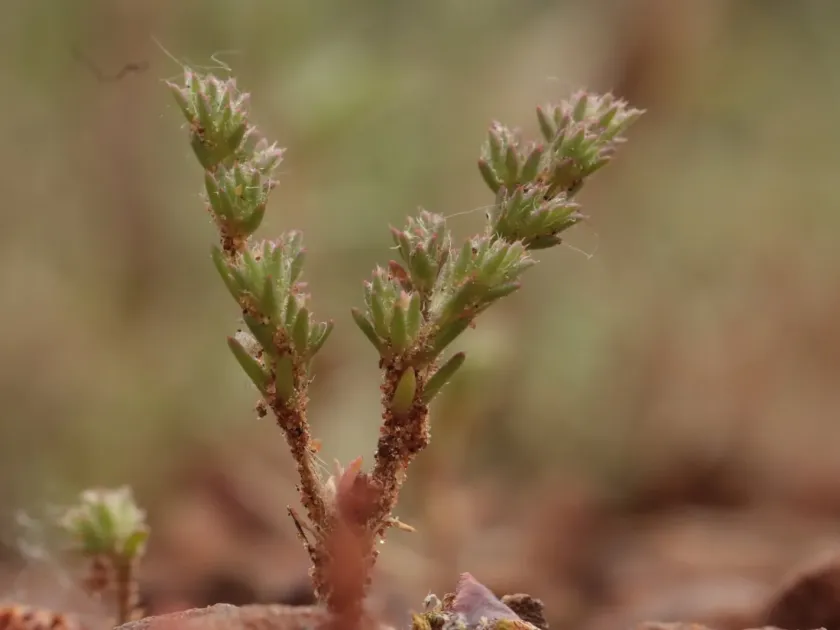
Botanically, it features small, awl-shaped leaves and inconspicuous flowers arranged in clusters along the stems. The plant typically exhibits a prostrate or semi-erect growth habit, forming low-lying mats that help preserve moisture near the root zone during hot periods of the year.
To cultivate or observe this species, well-drained, sandy, or stony soil is essential. It requires full exposure to sunlight and is exceptionally tolerant of heat and light intensity. It generally does not compete well with vigorous, high-nutrient-demanding vegetation, preferring sparsely populated habitats.
While there are no major industrial or agricultural applications for Loeflingia hispanica, its role in biodiversity is noteworthy in its native range. It acts as an indicator of specific soil types and climatic zones, typically appearing in neglected or non-intensively farmed agricultural areas where environmental stress is high.