
Leptolobium panamense
Leptolobium panamense
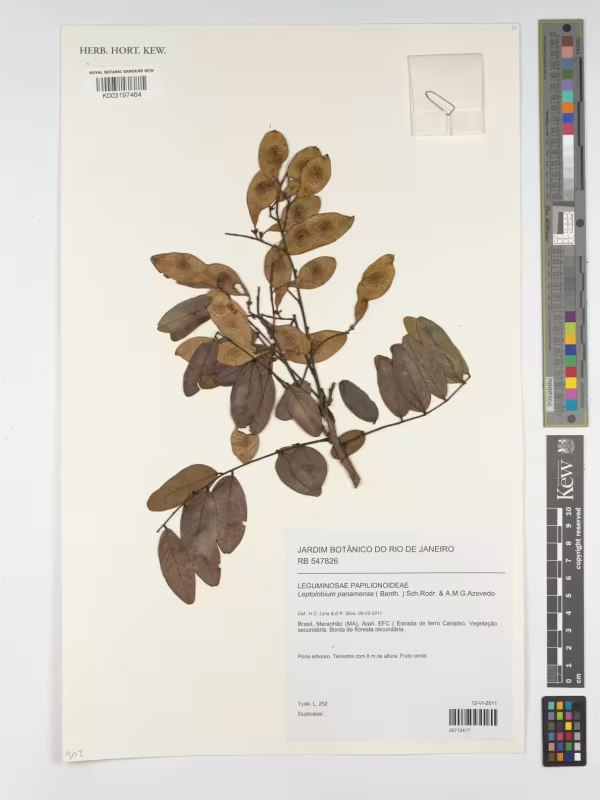
Description
Growing requirements
Leptolobium panamense is a significant tropical tree species belonging to the Fabaceae family. This tree is native to the forest ecosystems of Central and South America, thriving primarily in humid tropical regions that experience consistent and high annual rainfall levels.
The culture is extremely sensitive to temperature fluctuations and cannot withstand any form of frost. For optimal growth, the trees require deep, well-draining soils that are rich in organic matter, reflecting the specific ecological conditions found within tropical rainforest environments.
The plant exhibits a high demand for sunlight once it reaches maturity, although seedlings are capable of tolerating partial shade during their early growth stages. In its natural habitat, the tree contributes significantly to ecological stability, serving as a vital component for local biodiversity.
Botanically, the species is identified by its pinnate leaves and distinctive flowers that are common among the Papilionoideae subfamily. The wood produced by this tree is known for its remarkable density and durability against decay, making it a valuable resource for local carpentry and structural applications.
The economic utility of the species is primarily centered on sustainable timber harvesting and ornamental landscaping within tropical climates. Unlike typical agricultural crops that require intensive management, this species is cultivated under forestry standards, focusing on protecting growth during the initial establishment years.