
Stringy moss
Leptodictyum riparium
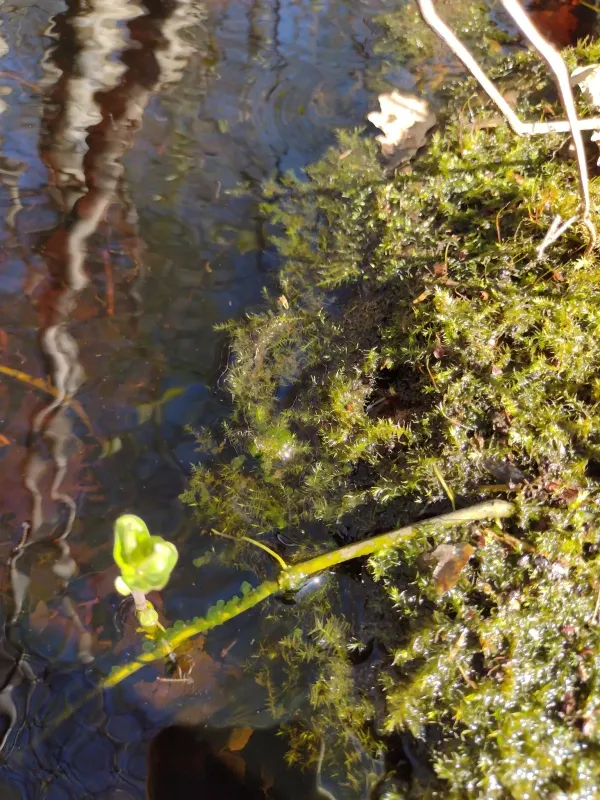
Description
Growing requirements
Stringy moss, scientifically known as Leptodictyum riparium, is a member of the Amblystegiaceae family. It is a highly adaptable aquatic plant that grows along shorelines and in submerged conditions throughout the Northern Hemisphere.
This species is valued for its unique growth pattern, forming long, string-like stems that can create dense underwater forests. It thrives in diverse environmental conditions, showing exceptional resilience to varying light intensities and water temperatures.
Optimal growth occurs in water temperatures ranging from 15°C to 26°C. While it is tolerant of low light, high-intensity artificial or natural lighting significantly boosts its photosynthetic activity and rate of biomass production.
The plant is not strictly demanding regarding water chemistry, yet it prefers slightly acidic to neutral pH levels. It is an efficient nutrient absorber, frequently utilized in natural filtration systems to maintain water quality by removing excess nitrates.
It can be cultivated on various substrates, including driftwood, rocks, or mesh pads. For industrial-scale cultivation, providing a steady flow of nutrient-rich water is essential to prevent the accumulation of waste products that could inhibit healthy stem elongation.
Yield
Under favorable conditions, Leptodictyum riparium demonstrates high growth rates. Biomass harvesting is generally performed by trimming the long, loose strands, allowing the remaining base to continue vegetative propagation and rapid recovery.
Main diseases and pests
Algal blooms are the primary concern for growers. Filamentous algae can entangle the moss, suffocating the plant and outcompeting it for light and nutrients. Regular maintenance and water parameter management are necessary to prevent this.
Accumulation of organic detritus within the moss structure can trigger anaerobic conditions. If the debris is not periodically flushed or cleaned, it can lead to localized rot and the subsequent loss of segments of the moss carpet.
Although it has a robust nature, copper-based chemicals used in aquatic environments can be toxic to this plant. Sensitivity to heavy metals means that water treatment products must be carefully selected to avoid damaging the culture.