
Lepidospartum squamatum
Lepidospartum squamatum
Description
Growing requirements
Lepidospartum squamatum, commonly known as scale broom, belongs to the Asteraceae family. This perennial shrub is highly specialized for life in harsh, semi-arid environments of North America.
Native to California and Mexico, the plant is naturally adapted to dry washes, alluvial fans, and sandy, nutrient-poor substrates. Its evolutionary history has focused on water conservation and tolerance to extreme heat.
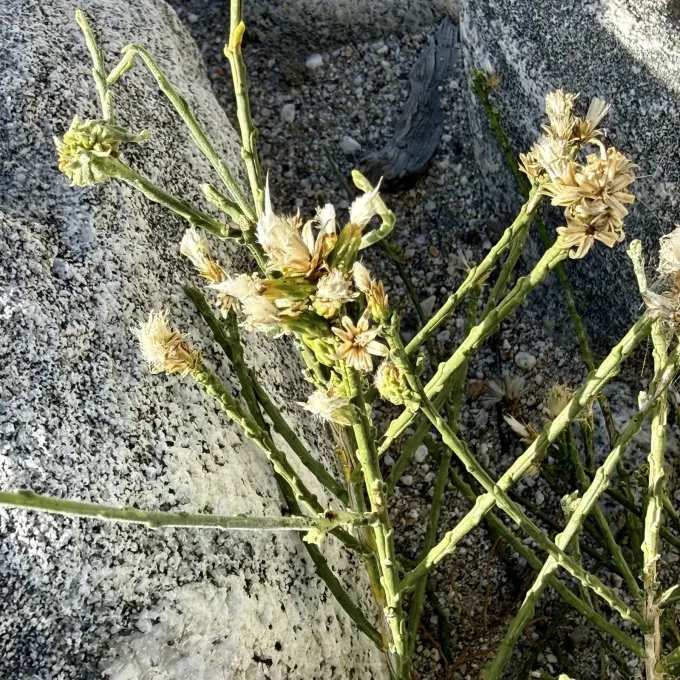
The botanical structure is remarkable: the leaves are reduced to small scales, and photosynthesis occurs primarily through the green, broom-like stems. This strategy significantly reduces water loss through transpiration.
For successful cultivation, the plant requires excellent drainage. Soils should be sandy, rocky, or gravelly to mimic its native habitat. Any water accumulation around the crown or roots can be fatal to the plant.
This species thrives under full sun exposure and is remarkably resilient to long periods of drought. It serves as an excellent candidate for low-maintenance landscaping where supplemental water is unavailable.
Main diseases and pests
The primary threat to the health of Lepidospartum squamatum is root rot caused by stagnant water. Excessive soil moisture is the leading cause of decline for this drought-adapted species.
While the plant is quite hardy, it can be occasionally affected by common sucking insects such as aphids or spider mites. These are typically controlled through natural balance or mild horticultural soaps.
Fungal pathogens associated with damp environments can colonize the base of the stem if ventilation is poor. Ensuring adequate air movement around the shrub is essential for disease prevention.
The plant demonstrates high natural resistance to most pests and diseases. Its sap contains secondary metabolites that act as a deterrent to many herbivores and invasive micro-organisms.
Maintaining a clean, weed-free zone around the root system is advisable during the establishment phase, as weeds can compete for nutrients and promote moisture retention that the shrub does not need.