
Leopoldinia piassaba
Leopoldinia piassaba
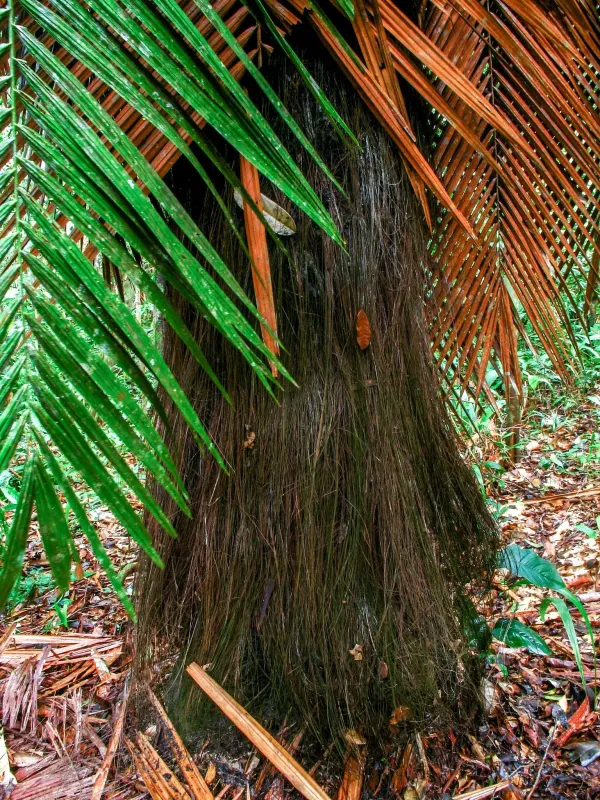
Description
Leopoldinia piassaba is a species of palm tree belonging to the Arecaceae family. Native to the Rio Negro basin in South America, specifically spanning parts of Brazil, Venezuela, and Colombia, this palm is globally recognized for the high-quality industrial fiber it produces, commercially known as piassava.
Botanically, this palm grows in the tropical rainforest environment. Its trunk is characterized by a thick, dark, and hair-like coat consisting of dead leaf bases. This fibrous covering serves as both a protective layer for the plant and a valuable harvestable resource for local populations and industries.
The palm is primarily found in wild stands known as "piassabais." While large-scale plantation farming is rare due to the plant's slow growth rate, the extraction of its fiber is a significant economic activity. It thrives in well-drained, acidic sandy soils common in the Amazonian lowlands.
In terms of usage, the fiber is prized for its extreme durability and resistance to decay, especially in aquatic environments. It is extensively utilized in the production of heavy-duty brushes, brooms, ropes, and artisanal handicrafts, remaining a staple of traditional agricultural-based economies.
##requirements##
Leopoldinia piassaba requires a humid tropical climate with high, constant temperatures. It is sensitive to frost and does not tolerate dry periods, making it strictly confined to ecosystems where atmospheric and soil moisture remain consistently high throughout the year.
The ideal soil conditions involve well-drained, sandy-textured substrates. While the plant can tolerate nutrient-poor soils, it benefits from the presence of organic matter found in riverine systems, which facilitates its steady growth and development into mature, fiber-producing specimens.
##harvest##
Harvesting involves the manual removal of the fibrous material from the trunk of the palm. Skilled harvesters cut the fibers carefully to avoid damaging the palm's apical meristem, ensuring the tree can continue to produce fiber for subsequent harvest cycles.
Post-harvest processing consists of cleaning the fibers, removing impurities, and sorting them by length and texture. The resulting product is then bundled for transport. Proper drying techniques are crucial to preventing fungal growth and ensuring the longevity of the fiber.