
Leonardoxa africana
Leonardoxa africana
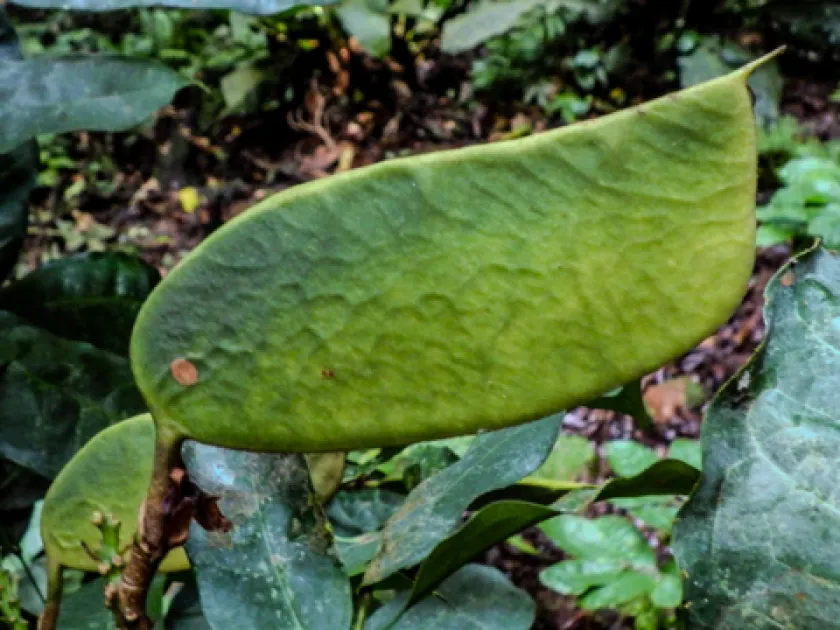
Description
Growing requirements
Leonardoxa africana is a species of flowering plant in the legume family, Fabaceae. It is native to the tropical rainforests of West Africa, specifically documented in countries like Cameroon and Gabon, where it thrives in humid forest understories.
The plant requires a strictly tropical climate characterized by high annual precipitation and consistent temperatures. It is highly sensitive to soil moisture fluctuations and performs best in deep, fertile soils that retain organic matter without becoming waterlogged.
Botanically, the species is renowned for its myrmecophytism. It possesses specialized structures such as swollen internodes which provide housing for symbiotic ants, primarily of the genus Petalomyrmex, which protect the tree from herbivorous insects and competing vines.
From an agricultural standpoint, Leonardoxa africana is primarily valued for its role in supporting ecosystem health rather than as a commercial food crop. It serves as a biological model for understanding plant-insect interactions and sustainable forestry management within African biomes.
Successful management of this species involves maintaining the integrity of the forest canopy to provide necessary shade and preventing soil erosion in its native habitat. Its ecological service in nutrient cycling and pest management makes it an object of interest for agroforestry researchers.