
Laurophyllus capensis
Laurophyllus capensis
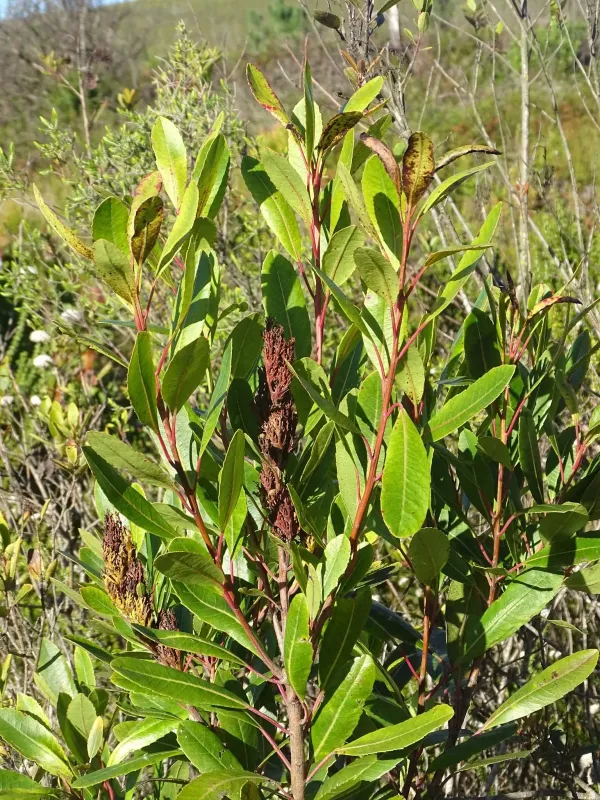
Description
Growing requirements
Laurophyllus capensis is the sole member of its genus within the Anisophylleaceae family. This evergreen shrub is endemic to the Cape region of South Africa, where it thrives in specific ecological niches.
The plant is adapted to the Mediterranean-type climate characterized by wet winters and dry, hot summers. It primarily grows on rocky slopes and sandy soils that possess excellent drainage qualities, essential for maintaining healthy root systems.
Cultivation requirements include a high exposure to sunlight and a well-regulated environment. Being a xerophytic-adapted shrub, it is highly resilient to water scarcity but struggles significantly in environments with high humidity or frequent frost.
Botanically, the plant is distinguished by its leathery, lance-shaped foliage which provides a high degree of protection against dehydration. Its growth habit is slow, reflecting its adaptation to nutrient-poor soils and challenging environmental conditions.
From an agronomical perspective, this species is not suited for mass commercial agriculture. Its reproduction is generally managed through specialized botanical nurseries focusing on conservation and preservation of rare South African endemics.
Harvesting
The economic utility of Laurophyllus capensis is limited and largely confined to research and conservation. It is not currently utilized as a primary source of any commercial crop, fiber, or industrial resource.
In historical contexts, it may have been utilized by local groups for traditional purposes, but it lacks a formal place in modern agronomy. Any collection of the plant must be conducted with strict adherence to environmental regulations.
Harvesting for botanical study involves careful pruning to ensure the shrub's longevity. Due to its slow metabolic rate, the plant does not regenerate quickly after significant physical damage or biomass removal.
Landscape management for this species is minimal, focusing mainly on soil stabilization and protection from invasive competition. Its role in the ecosystem is primarily that of a stable structural component in its native habitat.
Research into the biochemical properties of the leaves is ongoing in academic circles, though no significant commercial pharmaceutical application has been established. The focus remains on its genetic conservation rather than agricultural exploitation.