
Lasiurus scindicus
Lasiurus scindicus
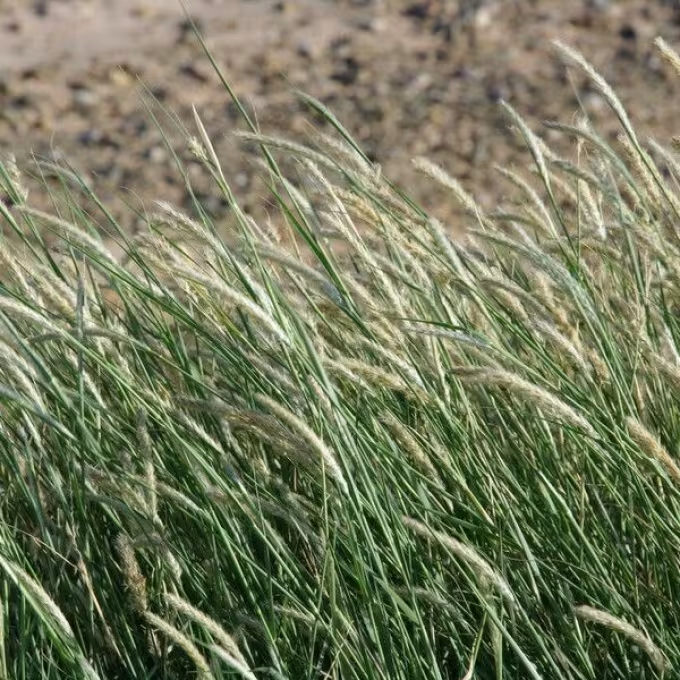
Description
Sowing dates
Lasiurus scindicus is a hardy, perennial grass belonging to the Poaceae family, widely recognized for its ability to thrive in extremely arid and desert environments.
Sowing should ideally coincide with the onset of monsoon rains to provide the necessary moisture for seed germination and the establishment of a robust root system.
The seeds require a shallow covering of sandy soil, as deep burial can impede the emergence of the delicate seedlings in the challenging desert heat.
Proper land preparation involves minimal disturbance of the topsoil, which helps to preserve the natural structure and moisture retention capacity of the desert soil.
Farmers are advised to protect the newly sown fields from livestock grazing for at least one full growth cycle to ensure the plants reach maturity and develop dense tillering.
Growing requirements
This grass is specifically adapted to regions with low and irregular rainfall, often thriving in areas where other forage crops would fail to survive.
It prefers well-drained, sandy, or coarse-textured soils where its deep root system can access hidden moisture reserves in the subsoil layers.
Lasiurus scindicus is intolerant to waterlogging and soil compaction, making it unsuitable for heavy clay lands or areas prone to seasonal floods.
The plant demonstrates excellent thermal tolerance, surviving extreme temperatures often exceeding 40 degrees Celsius while maintaining its metabolic processes.
Full solar exposure is a critical requirement for this species, as shading from trees or structures significantly reduces its vigor, biomass production, and seed set.
Yield
The biomass yield of Lasiurus scindicus is impressive for desert conditions, often producing 2-5 tonnes of dry matter per hectare depending on rainfall patterns.
Nutritionally, the grass provides high-quality forage for livestock, maintaining its protein content better than many other desert grasses during the dry season.
When managed through rotational grazing, the yield can be sustained over many years, as the plant possesses a strong regenerative capacity from its underground rhizomes.
Productivity is directly linked to soil nutrient availability; supplemental low-dose fertilization can be beneficial on degraded lands to kickstart growth.
Harvesting for fodder or seed must be balanced with the plant's need to recover its photosynthetic capacity to ensure long-term sustainability of the pasture.
Main diseases and pests
Overgrazing is the most significant threat, as it reduces the plant's leaf area and exposes the soil to wind erosion, potentially leading to the loss of the stand.
Fungal diseases like leaf rust may occur if there are unexpected prolonged periods of high humidity combined with stagnant air circulation.
Locusts and grasshoppers represent the primary pest risk, with outbreaks capable of stripping large areas of Lasiurus vegetation in a very short time.
Invasive weed species can compete with Lasiurus during the establishment phase, making weed control essential in the early stages of the crop's development.
Maintaining a healthy, non-stressed population is the best defense against pests and diseases, as healthy plants show natural resistance to most local pathogens.
Harvesting
Harvesting for hay should be timed just before the seeds shatter to ensure the best balance between biomass quantity and nutritional density of the hay.
Cutting should be performed at a height of approximately 10-15 cm to protect the crown of the plant and facilitate rapid regrowth after the harvest.
Drying the harvested biomass quickly is crucial to maintain quality, though the desert heat typically makes this process efficient and natural.
For seed production, harvesting is usually done manually or with specialized equipment that captures the seeds before they are dispersed by the wind.
Storing the harvested material in dry, well-ventilated conditions prevents microbial growth and ensures the long-term viability of the forage for supplemental feeding.