
Landoltia punctata
Landoltia punctata (G. Mey.) Les & D. J. Crawford
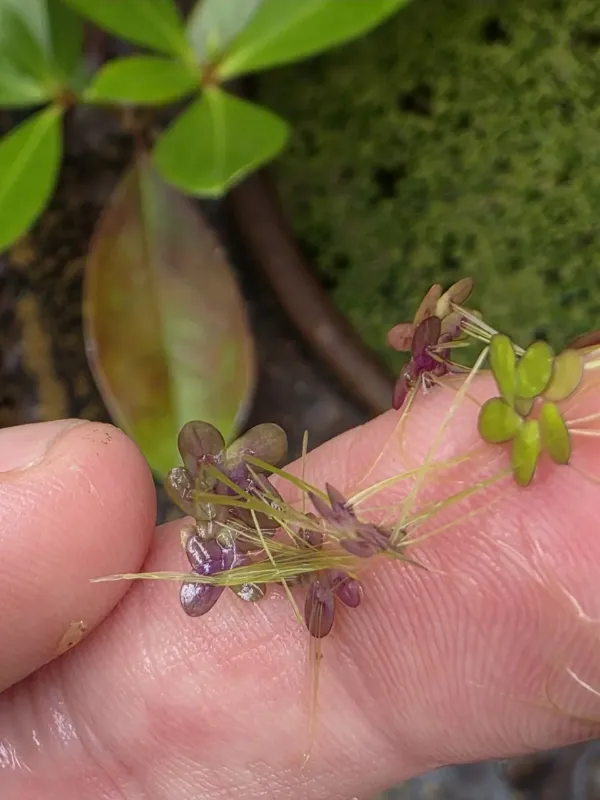
Description
Sowing dates
Landoltia punctata is an aquatic plant that propagates vegetatively; it is not sown using seeds in the traditional agricultural sense but introduced via colony fragments.
Cultivation initiates by distributing healthy mother colonies across the surface of a prepared pond or controlled water tank under warm, stable conditions.
The optimal starting period is during the spring or early summer when water temperatures consistently stay between 20 and 25 degrees Celsius for growth.
Initial stocking density is crucial: providing enough space for the colonies to expand while ensuring the water surface is covered adequately for maximum productivity.
Proper set-up requires ensuring the water remains calm, as excessive turbulence can inhibit the initial development and spreading of the plant colonies.
Growing requirements
This species belongs to the Araceae family and consists of small, flat, leaf-like structures (fronds) with roots that hang into the water to absorb nutrients.
Landoltia punctata thrives in nitrogen and phosphorus-rich environments, making it highly effective for filtering agricultural runoff and municipal wastewater.
It prefers a water pH range of 6.0 to 8.0 and requires sufficient sunlight, although it remains robust across varying light intensities in diverse climates.
Temperature tolerance is wide, but optimal photosynthetic efficiency occurs in warm conditions; extreme cold often triggers the formation of dormant turions.
The plant requires stagnant or slow-moving water; thus, managing water flow in the cultivation area is essential for both growth and successful mass harvesting.
Yield
The yield of Landoltia punctata is exceptionally high, with the potential to double its biomass in just a few days under ideal nutrient-rich conditions.
In managed aquaculture systems, controlled harvesting keeps the population in the exponential growth phase, resulting in massive annual output of dry matter.
The biomass serves as a high-protein feed ingredient for fish, poultry, and livestock, offering a sustainable alternative to conventional plant protein sources.
Productivity is measured by the frequency of harvest; frequent partial harvests are preferred to maintain the health and vigor of the remaining aquatic colony.
Under optimal light and nutrient supplementation, the total dry mass production per hectare can be significantly higher than most land-based crops.
Main diseases and pests
Fungal pathogens and bacterial decay are the primary threats, especially when water quality degrades or overcrowding leads to oxygen depletion in the pond.
Invasive aquatic insects can graze on the fronds, potentially reducing the growth rate and overall biomass quality if not monitored and managed properly.
Algal blooms pose a significant competition for nutrients and light, which can stifle the growth of the Landoltia colonies if the bloom is not controlled.
Chemical pollutants, including heavy metals or herbicide runoff, can lead to severe tissue necrosis and death of the sensitive aquatic plant population.
Effective management includes regular water analysis and the implementation of bio-filters to prevent the entry of contaminants into the cultivation area.
Harvesting
Harvesting is typically performed using floating mechanical rakes or specialized conveyor belt systems that skim the surface of the water without disturbing the roots.
Post-harvest processing involves dewatering the biomass through screens or centrifugal separators to remove excess moisture before drying or ensiling the crop.
The timing of the harvest is usually dictated by the canopy closure on the water surface; harvesting when the surface is fully covered maximizes yield.
Efficient collection is vital not just for production but for environmental maintenance, preventing the accumulation of organic waste at the bottom of the pond.
The harvested material can be used fresh for immediate consumption, or dehydrated for storage as a long-term nutritional additive for agricultural use.