
Lanaria lanata
Lanaria lanata
Description
Sowing dates
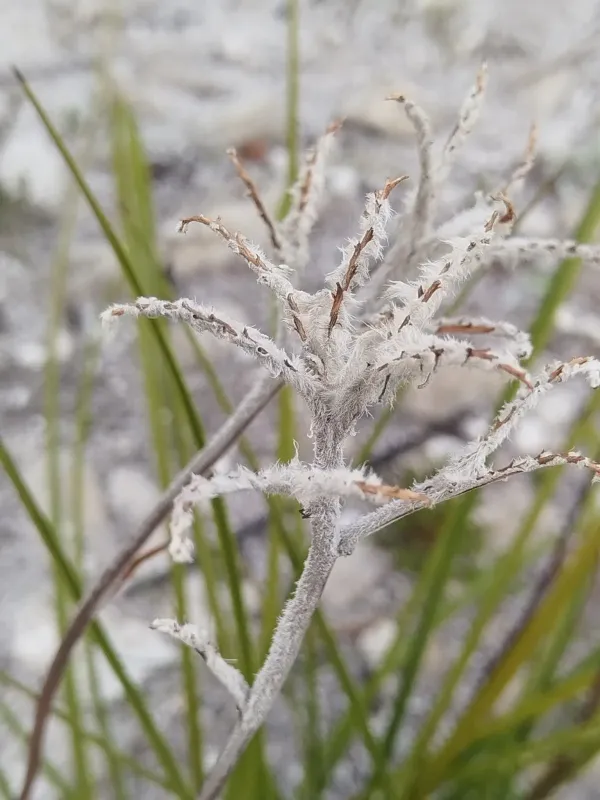
Lanaria lanata is a perennial plant member of the Haemodoraceae family, known for its distinct woolly appearance. Propagation is primarily achieved through seeds, which require specific conditions to germinate successfully.
Seed treatment involving cold stratification is often necessary to break dormancy. Sowing occurs in early spring into a well-draining, sandy-based medium that mimics the natural substrate of its native habitat.
Seeds should be covered lightly and kept at a consistent, moderate temperature. Excessive heat during the germination phase can inhibit the development of the embryos and lead to failure.
Once the seedlings have developed their first true leaves, they should be spaced adequately to prevent competition for resources. Careful handling is required to avoid damaging the delicate root systems.
Hardening off the plants before transferring them to their permanent location is essential for survival. Establishing the plants in containers before moving them outdoors can significantly improve their success rate.
Growing requirements
Native to the Cape Floristic Region of South Africa, Lanaria lanata is adapted to environments with winter rainfall and dry summers. It requires full sun exposure to thrive and develop its characteristic form.
The soil must be well-drained, acidic to neutral, and low in organic matter. Sandy soils are preferable, as they prevent water accumulation around the roots, which is vital to prevent root rot.
Temperature management is crucial; while it can tolerate some cool weather, it is not frost-hardy in severe conditions. Proper ventilation is needed to prevent fungal issues caused by stagnant air.
Watering frequency should be aligned with the growth cycle, providing sufficient moisture during the growing season while ensuring the soil dries out completely during the dormant period.
Minimal fertilization is required as the plant is adapted to nutrient-poor soils. Over-fertilization, especially with nitrogen, can negatively affect its structural integrity and ornamental value.
Main diseases and pests
The most common threat to Lanaria lanata is fungal infection, particularly root rot, which typically results from waterlogged conditions or poor air circulation within the canopy.
Pests such as spider mites may become problematic in warm, dry greenhouse conditions. Monitoring for webbing on the undersides of leaves is a standard preventive measure for agronomists.
Aphids can occasionally target the inflorescences. Controlling these populations with insecticidal soap or biological predators is recommended to protect the floral display.
In humid climates, mildew can manifest on the foliage. Maintaining dry, airy conditions and ensuring proper spacing between plants are the best ways to mitigate this risk.
Good hygiene practices, such as removing dead plant material and using sterilized tools, are essential to prevent the spread of pathogens throughout the cultivation area.