
Lacebark tree
Lagetta lintearia
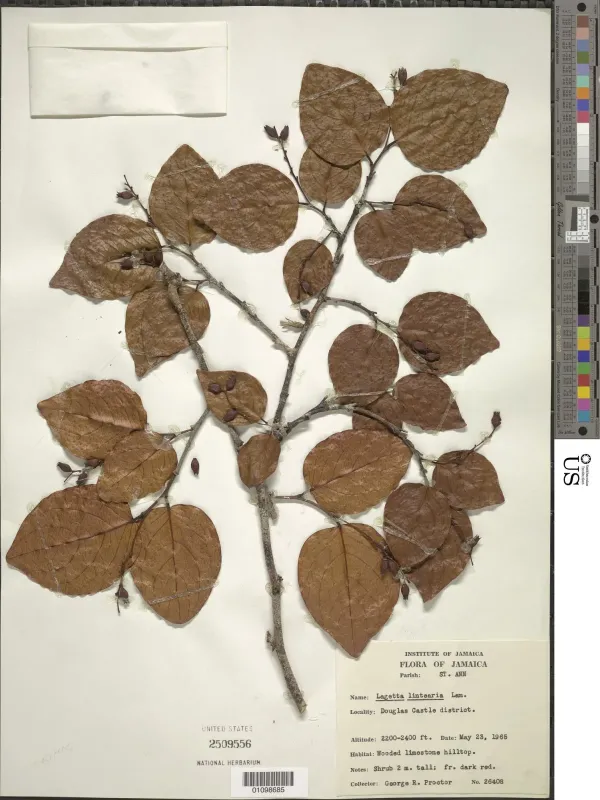
Description
Growing requirements
The lacebark tree (Lagetta lintearia) is an evergreen shrub or small tree belonging to the Thymelaeaceae family. It is native to the Caribbean, particularly Jamaica, where it thrives in warm and humid tropical forest environments.
The plant requires a strictly tropical climate with consistent warmth throughout the year. It cannot survive frost and is highly sensitive to cold spells, making greenhouse cultivation essential in regions outside the tropics.
For optimal growth, the lacebark tree needs fertile, well-drained soil rich in organic matter. Proper aeration of the root zone is crucial, as the plant is susceptible to root rot if water stagnation occurs in the substrate.
Light levels should be managed carefully, with preference given to bright but filtered light. Direct tropical sun can sometimes be too intense, leading to leaf scorching, especially in younger specimens.
The most distinctive biological feature of the tree is its inner bark, which consists of multiple interlaced layers of bast fibers. When the bark is carefully expanded, it creates a natural mesh that resembles intricate lace or fine textile fabric.
Harvesting
Harvesting the lacebark involves the careful stripping of the bark from young branches or stems. Once removed, the outer corky layer is scraped away to reveal the inner fibrous, lace-like structure.
Historically, the fibers have been used to create a variety of items, including hats, bags, and traditional clothing. The material is surprisingly durable and can be manipulated into different shapes through careful stretching.
Post-harvest processing includes thorough cleaning and shade drying. The fibers must remain supple, so drying in direct heat or harsh sunlight is typically avoided to prevent the material from becoming brittle.
While the tree is not a primary industrial crop today, it remains culturally significant in Caribbean craft traditions. Artisans continue to value the material for its unique texture and natural beauty.
Proper storage is essential to maintain the quality of the processed fibers. Keeping them in a cool, dry place ensures that the delicate lace structure does not degrade or lose its inherent flexibility over time.