
Koelpinia linearis
Koelpinia linearis
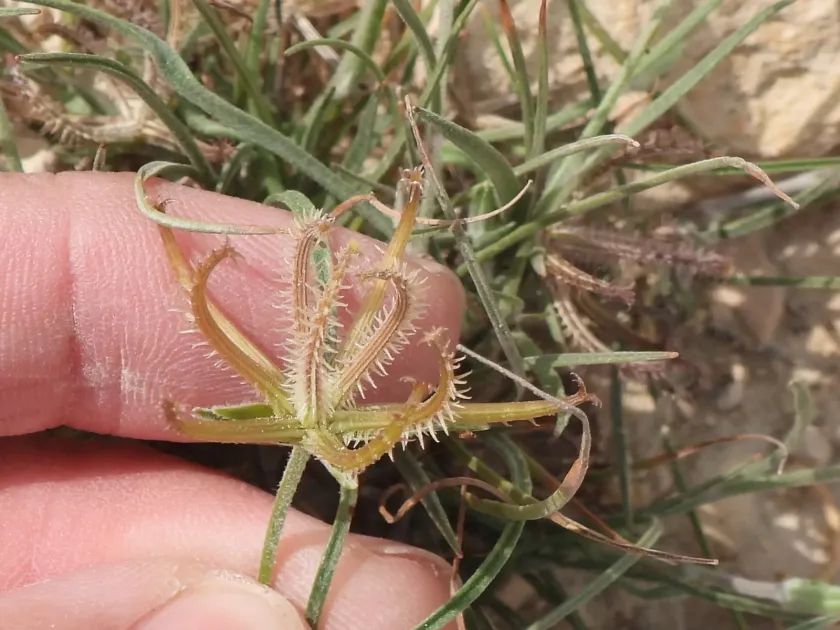
Description
Growing requirements
Koelpinia linearis is an annual herb that belongs to the Asteraceae family. It is well-adapted to the challenging conditions of arid and semi-arid environments, thriving in sandy soils and open landscapes.
The plant is characterized by its slender, linear leaves and small yellow flower heads. These structures are evolutionary adaptations that allow the plant to thrive in regions where water scarcity is the primary limiting factor for vegetation.
Native to parts of Central Asia, Iran, and North Africa, the species is typically found in desert plains and saline habitats. It serves as an important component of the natural ecosystem in these regions, acting as a pioneer species on degraded lands.
Regarding its growth requirements, Koelpinia linearis thrives in high-light conditions and prefers well-drained, nutrient-poor soil. It exhibits a rapid life cycle, allowing it to complete flowering and seed production before the onset of the hottest summer months.
In terms of agricultural significance, while not a mainstream crop, it is recognized for its utility as forage in extensive grazing systems, particularly for camels and small ruminants that are adapted to desert pastures.
Main diseases and pests
The main threat to the species is overgrazing, which depletes the soil seed bank and prevents the plant from completing its reproductive cycle effectively during the growing season.
Insect pests such as aphids and various weevils frequently attack the succulent parts of the stem, potentially hindering plant vigor and reducing seed set during drought-stressed periods.
Fungal infections can occur if there is unseasonable rainfall during the maturation phase, which increases humidity levels around the foliage and encourages the development of pathogens.
Anthropogenic pressure and land conversion often lead to habitat fragmentation, making it difficult for Koelpinia linearis to maintain healthy populations in areas undergoing development.
Competing with invasive ruderal weeds can also threaten the presence of this species, as it is often outcompeted for nutrients and space in disturbed soil environments.