
Klainedoxa gabonensis
Klainedoxa gabonensis
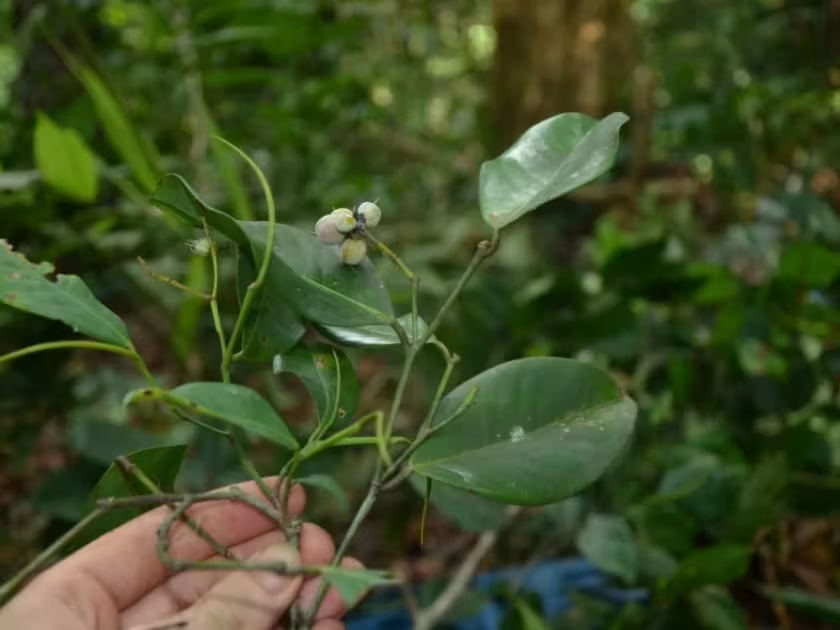
Description
Growing requirements
Klainedoxa gabonensis, a member of the Irvingiaceae family, is a massive evergreen tree native to the tropical rainforests of Central and Western Africa. It is recognized for its impressive size, often reaching heights of 40 meters or more.
The tree thrives in environments with high rainfall and consistent tropical temperatures. It is best adapted to deep, fertile, and well-drained soils, common in equatorial forest zones where it functions as a dominant emergent species.
Botanically, it is notable for its massive trunk and distinct buttress roots, which provide stability in shallow or wet tropical soils. The canopy is dense and provides vital shade, contributing significantly to the forest microclimate.
In terms of agricultural and forestry utility, Klainedoxa gabonensis is highly valued for its durable and heavy timber. The wood is widely utilized in local construction due to its resistance to moisture and structural integrity.
The fruits produced by the tree are fleshy and serve as a critical food source for forest fauna, including primates and large birds. This ecological role makes the tree an essential component of local forest biodiversity and sustainability.
Main diseases and pests
The primary threat to the species is habitat loss due to deforestation and land-use changes. As an emergent tree, it requires significant space and stable forest conditions, which are currently being threatened by agricultural expansion.
Wood-rotting fungi represent a biological threat, particularly in trees that have sustained mechanical damage from logging or environmental factors. Such infections can significantly compromise the economic value of the wood.
Insect pests, including various boring beetles, can attack the bark and wood of stressed trees. Monitoring the health of stands is essential, especially in areas where environmental conditions are fluctuating or changing.
Young seedlings are particularly vulnerable to foraging by rodents and ungulates. Establishing protected zones for young growth is critical to ensuring the natural regeneration of the species in degraded areas.
Hydrological changes in the ecosystem are dangerous, as the tree relies on stable soil moisture levels. Excessive drying of the forest floor, caused by nearby clearing or drainage projects, can lead to widespread decline in local populations.