
Kelleria laxa
Kelleria laxa
Description
Growing requirements
Kelleria laxa is a distinctive alpine species belonging to the Thymelaeaceae family. It is native to the high-altitude regions of New Zealand and is primarily recognized for its unique adaptation to extreme mountainous environments rather than agricultural utility.
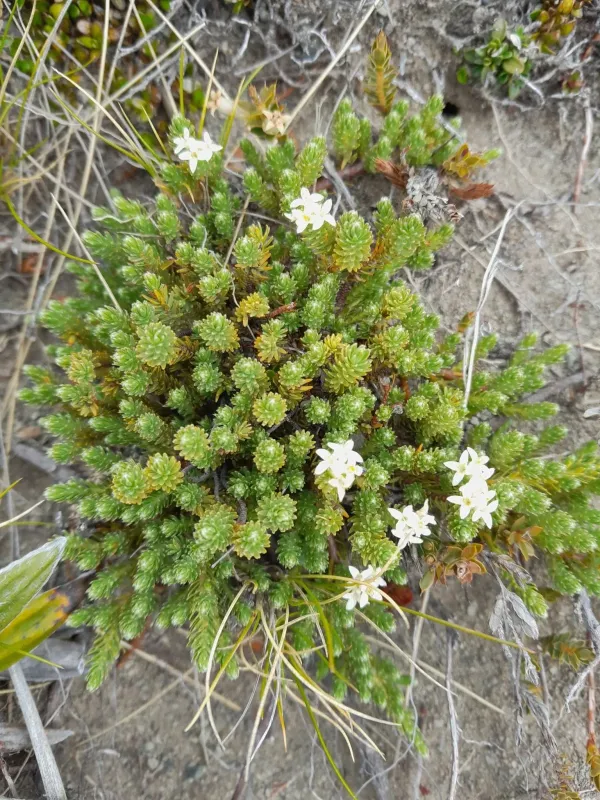
The botanical structure of the plant is characterized by a cushion-forming habit, which is a classic adaptation for surviving high wind speeds and cold temperatures. The leaves are small, closely packed, and leathery, designed to retain moisture and resist mechanical stress.
In terms of environmental requirements, Kelleria laxa thrives in poor, rocky, and free-draining soils. The species is highly intolerant of waterlogging and heavy nitrogenous fertilizers, which can easily induce root rot and developmental anomalies.
Climatic adaptability is restricted to cool, moist environments with high light intensity but low average temperatures. Successful cultivation is essentially impossible in lowland areas without specialized climate-controlled equipment to simulate alpine conditions.
Regarding хозяйственное usage, the plant holds value mainly for botanical research and as an ornamental novelty for alpine garden enthusiasts. It is not cultivated for agricultural or commercial food production, as its growth cycle and soil requirements are strictly non-agricultural.