
Hairy laurel
Kalmia hirsuta
Description
Growing requirements
The Hairy laurel (Kalmia hirsuta), a member of the Ericaceae family, is a distinct evergreen shrub. It is native to the sandy and moist pine barrens of the southeastern United States.
Cultivation requires specific conditions, primarily acidic, well-draining soil rich in organic matter. Like other members of the heath family, it is highly sensitive to soil pH levels and heavy clay environments.
The plant thrives in regions with moderate temperatures and high humidity. While it prefers partial shade, it requires adequate light to promote healthy blooming and to prevent the plant from becoming leggy.
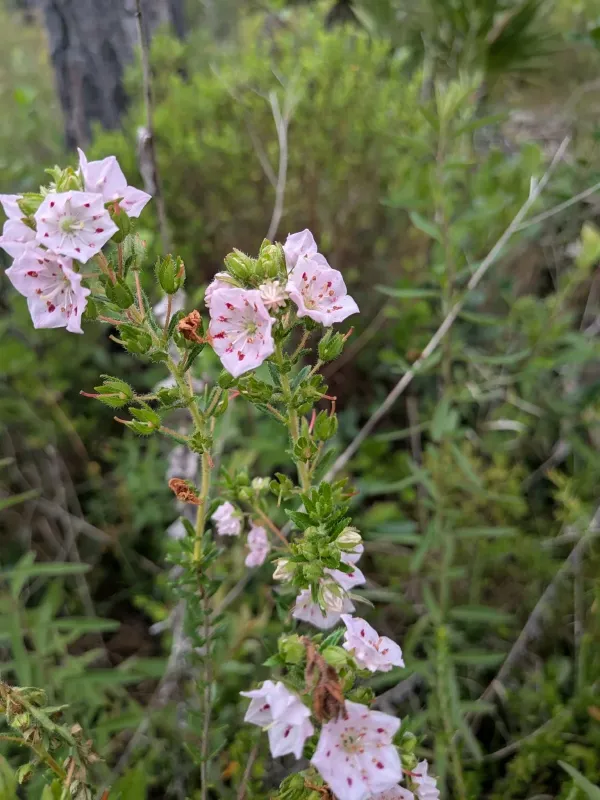
Botanically, it is identified by the presence of small glandular hairs on its leaves and stems. These features give the plant its characteristic texture and contribute to its unique appearance in garden landscapes.
In landscaping, this species is highly regarded for its aesthetic value. It is often incorporated into woodland gardens or rockeries that provide the necessary acidic environment for successful growth.
Main diseases and pests
Root rot is the most significant threat to the Hairy laurel, often resulting from poor drainage or excessive watering. Maintaining the correct soil moisture is vital for health.
Leaf spot diseases may occur in environments with high humidity and poor air circulation, necessitating strategic pruning to improve airflow around the foliage.
Pests such as spider mites and scale insects can be problematic, especially during hot and dry summer months when the plant is under increased stress.
Implementing regular monitoring and the use of appropriate horticultural oils or insecticides helps mitigate the impact of common garden pests effectively.
Additionally, maintaining the soil's acidity is essential, as a rise in pH can lead to nutrient deficiencies, specifically iron chlorosis, which weakens the plant significantly.