
Justicia crassifolia
Justicia crassifolia
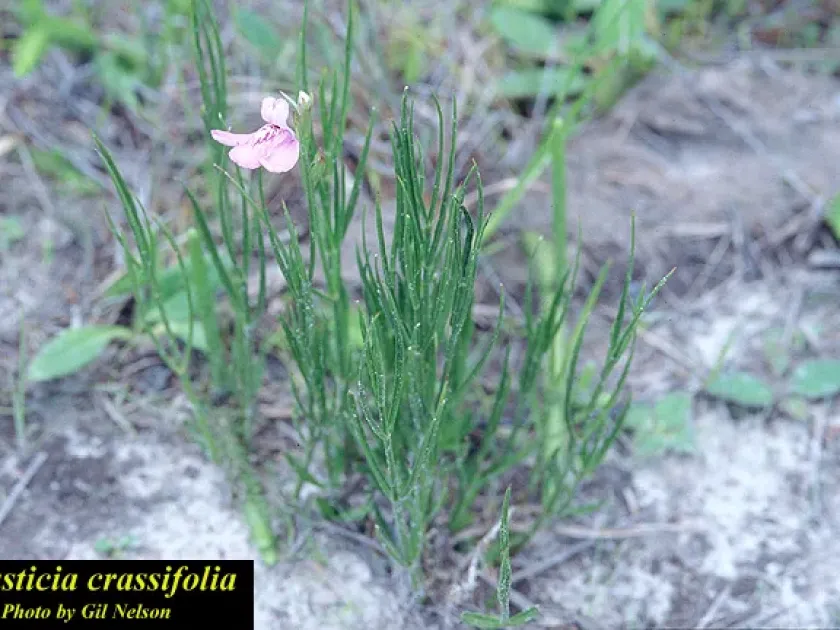
Description
Growing requirements
Justicia crassifolia is an intriguing species within the Acanthaceae family. Originating from tropical environments, this plant has adapted to survive in shaded understory areas, making it a unique candidate for controlled cultivation in greenhouses and indoor gardens.
The botanical structure of the plant is defined by its thick, fleshy leaves and sturdy stems. These features are evolutionary adaptations for water storage, allowing the plant to tolerate short periods of moderate dryness without significant physiological damage.
Success in cultivating this species depends heavily on stable climatic parameters. It thrives best in environments where temperatures remain between 20°C and 25°C, as it lacks cold hardiness and will succumb to damage in frost conditions or prolonged cool temperatures.
Regarding soil requirements, Justicia crassifolia needs a substrate that balances moisture retention with high permeability. A well-draining potting mix, often enhanced with perlite or organic coarse matter, is essential to prevent root asphyxiation during irrigation.
In terms of economic utility, this plant is primarily used as an ornamental species. It is highly sought after by botanical collectors and professional landscapers for its aesthetic foliage and elegant floral displays, providing value in both luxury interior design and protected conservatory settings.
Main diseases and pests
Spider mites represent a significant threat to Justicia crassifolia, particularly in environments with low air humidity. These pests feed on the cell sap, causing yellowing and eventual shedding of the leaves if left untreated by appropriate miticidal applications.
Fungal pathogens, such as Botrytis, are common risks when ventilation is poor. The accumulation of moisture on the leaf surfaces creates an ideal environment for spore germination, necessitating consistent airflow and the maintenance of dry foliage after watering.
Root rot is the most common physiological disorder caused by improper watering techniques. Over-saturating the soil prevents root oxygenation, which rapidly leads to decay and eventual plant collapse if not addressed through repotting and substrate correction.
Mealybugs can also infest the plant, usually hiding in the axils of the leaves. Manual removal or the application of systemic insecticides is often required to keep populations under control during the peak growth months of the year.
To ensure long-term health, growers must monitor for nutritional imbalances. While the plant is hardy, excessive fertilization can lead to osmotic stress, weakening the plant and making it more susceptible to opportunistic diseases and pests.