
Cornus elliptica
Cornus elliptica (Pojark.) Q. Y. Xiang & Boufford
Description
Growing requirements
Cornus elliptica is a distinctive woody species belonging to the Cornaceae family. Originating from the mountainous forests of East Asia, it has gained recognition in ornamental horticulture for its elegant growth habit and unique foliage structure.
The species thrives best in well-drained, slightly acidic to neutral soils enriched with organic matter. While it is adaptable to various soil types, it performs best in positions where it receives morning sunlight and afternoon shade, mimicking the forest edge environment of its native range.
Regarding climate, this dogwood prefers regions with distinct seasons but requires protection from extreme desiccation during hot, dry spells. It is moderately hardy; however, young plants may need winter mulch or burlap wraps to survive harsh frost conditions in colder zones.
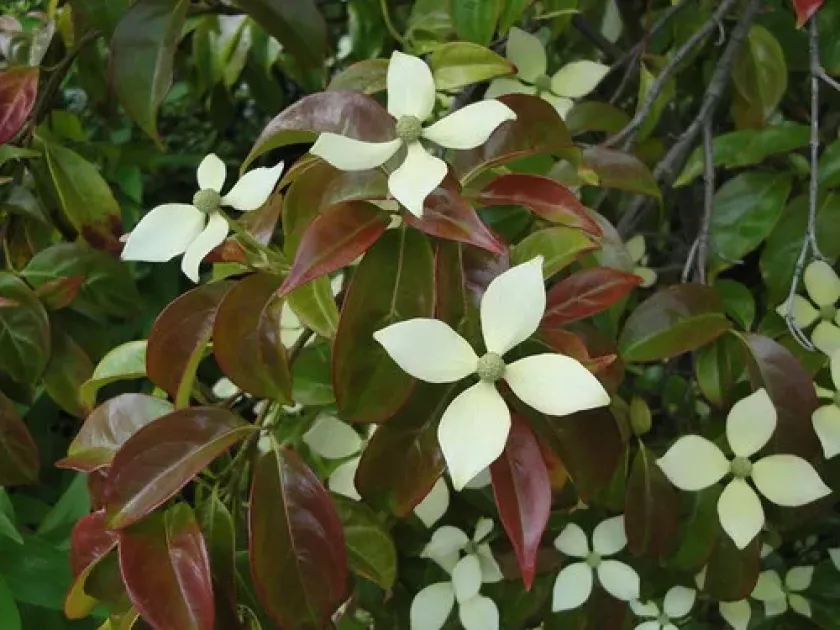
The botanical profile of Cornus elliptica is defined by its elliptical leaves and its striking inflorescences. These flowers are often accompanied by showy bracts that persist throughout the season, providing significant ornamental value to gardens and public parks.
In landscaping, it is highly prized as a specimen plant. It serves well in mixed shrub borders or as a focal point, contributing to architectural design due to its relatively slow growth and manageable size, which requires minimal pruning to maintain shape.
Main diseases and pests
The main pathological threats to Cornus elliptica involve foliar diseases, particularly powdery mildew, which can significantly damage the leaves if air circulation is inadequate. Maintaining a proper planting distance is the most effective cultural control measure.
Insect pests such as aphids and leaf-eating beetles can cause minor to moderate damage, especially during the active growth phases in spring. Integrated pest management strategies, including the use of neem oil or soft soaps, are recommended for organic maintenance.
Root rot is a critical concern, especially in heavy or waterlogged soils. Ensuring excellent drainage through soil amendment or raised beds is essential for the long-term vitality of the root system, as constant moisture often invites opportunistic pathogens.
Scale insects can occasionally infest the bark of older specimens. Regular inspections during dormant periods are advised, as these pests can weaken the plant by drawing sap, eventually leading to dieback of smaller twigs if left untreated.
Finally, environmental stress can predispose the plant to secondary infections. Ensuring the shrub is well-hydrated and properly fertilized during the growing season will strengthen its natural immune response against common pathogens and stressors.