
Java fern
Colysis pteropus (Blume) Bosman
Description
Growing requirements
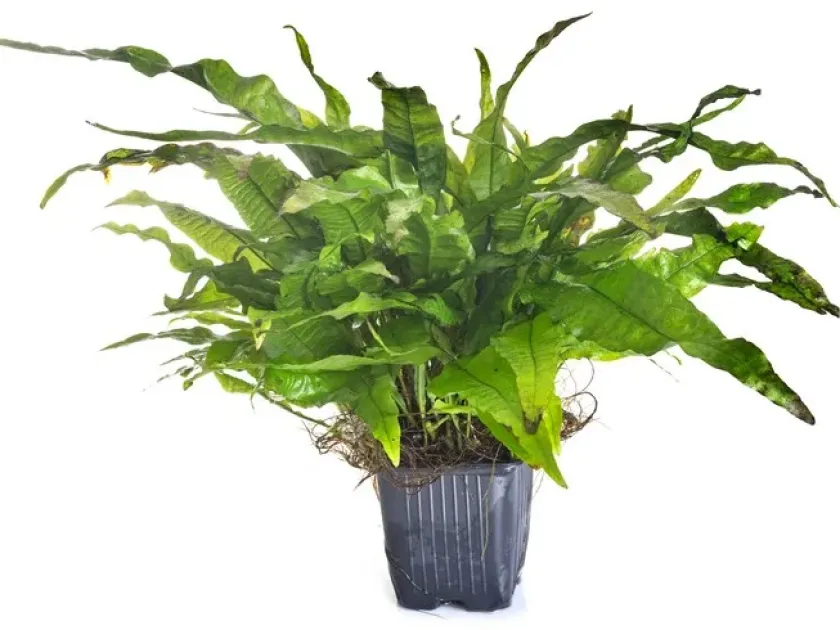
The Java fern (scientifically known as Microsorum pteropus) is a prominent member of the Polypodiaceae family. Native to Southeast Asia, this species has adapted to growing in tropical streams, attaching itself to hard substrates like rocks and driftwood. Its unique appearance makes it a cornerstone plant for many freshwater aquatic landscapes.
Regarding its biological requirements, this fern is highly resilient but thrives best in temperatures ranging from 20 to 28 degrees Celsius. Unlike many other aquatic species, it does not require a nutrient-rich substrate. In fact, its creeping rhizome should never be buried in gravel or sand, as this will lead to tissue necrosis and the eventual death of the specimen.
For optimal growth, the plant requires moderate lighting levels. High-intensity lighting, combined with improper nutrient management, often encourages the growth of nuisance algae on the leaves. Providing a stable flow of water is beneficial, as it mimics the plant's natural riverine habitat and ensures a constant supply of nutrients to the fronds.
The propagation and establishment of Java fern are relatively straightforward. The most common method involves attaching the rhizome to décor using fishing line, thread, or specialized plant glue. Over time, the root system will anchor firmly to the substrate, allowing the fern to flourish and produce new adventitious plantlets from the tips of its leaves.
Commercially, Java fern is widely traded as an ornamental aquarium plant. Its tough, leathery fronds are unpalatable to most herbivorous fish, which is a major advantage for aquarists managing community tanks. It acts as an effective bio-filter, helping to maintain water quality by sequestering nitrogenous waste compounds.
Main diseases and pests
The primary threats to this plant are various species of filamentous algae, which can rapidly cover the foliage if the tank balance is off. Regular water changes and avoiding excessive light exposure are the most effective preventative measures against such infestations.
Physiological stress can manifest as the darkening or melting of leaves. This is typically caused by significant fluctuations in water parameters, extreme heat, or exposure to copper-based medications intended for fish treatment. Maintaining water stability is the best approach to ensure long-term plant health.