
Indian swampweed
Hygrophila polysperma (Roxb.) T. Anderson
Description
Growing requirements
Indian swampweed (Hygrophila polysperma) belongs to the Acanthaceae family. It is a highly adaptable aquatic species native to the tropical ecosystems of Southeast Asia.
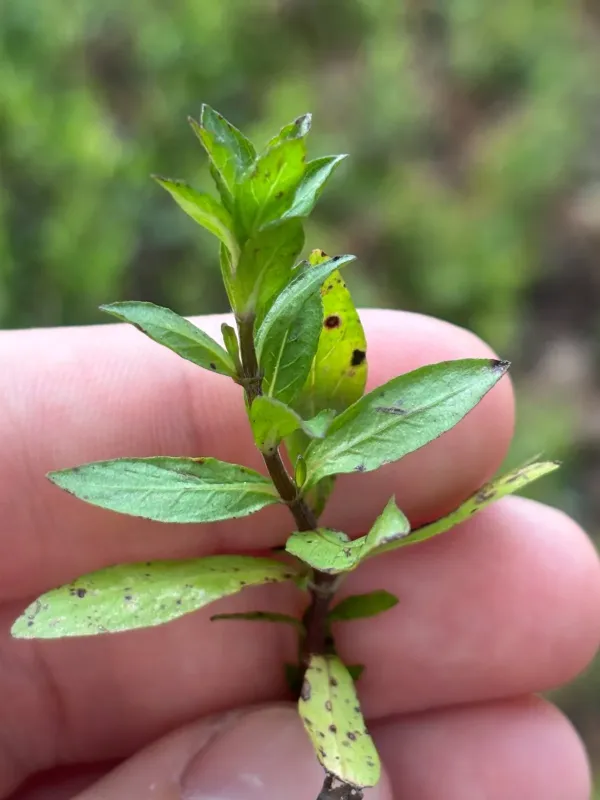
The plant is characterized by its fast-growing, creeping or upright stems with lanceolate leaves. Its biological plasticity allows it to thrive both submerged and emersed, depending on the environmental saturation.
For successful cultivation, the plant requires consistent lighting levels, typically ranging from moderate to intense. Proper light quality significantly impacts the pigment development in the leaves.
Water quality parameters must remain stable, with a preferred temperature range between 20°C and 28°C. It is highly efficient at nutrient uptake, acting as an excellent stabilizer for aquatic environments.
The substrate should be rich in minerals, and supplemental CO2 injection is highly recommended for commercial production to maximize growth rates and biomass output.
Main diseases and pests
The most common physiological threat is iron deficiency, which leads to chlorosis. This condition is easily corrected by adding chelated iron to the water column.
Algal blooms, specifically filamentous algae, often compete with the plants for nutrients and light. Maintaining high water circulation is necessary to prevent these occurrences.
Pests like aquatic snails can cause mechanical damage to the foliage. In large-scale operations, biological control or careful quarantine measures are employed to mitigate this issue.
Because of its rapid growth, the plant can become invasive if introduced into natural waterways. Therefore, containment protocols are essential in any commercial or horticultural setting.
Mechanical injury during harvest can lead to necrotic patches on the stems. Using sharp, sterile tools is a critical practice for maintaining the health of the parent crop.