
Spanish Hispidella
Hispidella hispanica
Description
Growing requirements
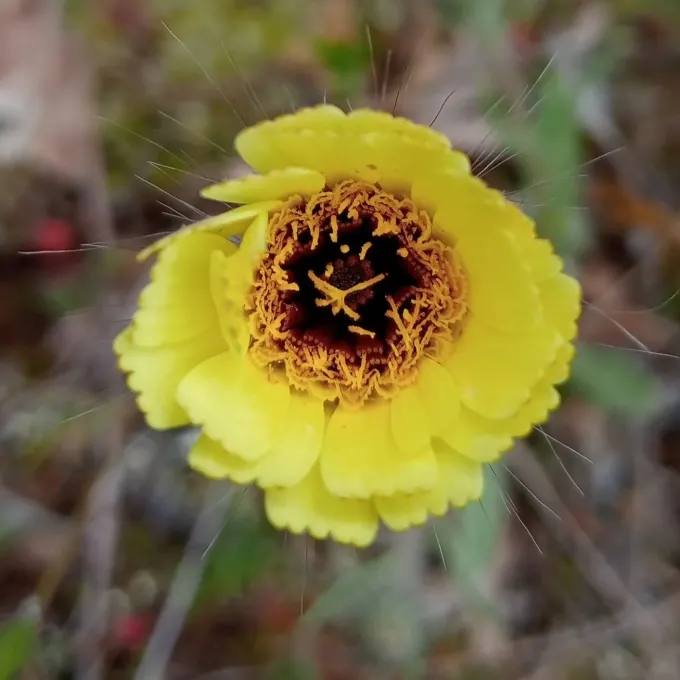
Spanish Hispidella (Hispidella hispanica) is a perennial herbaceous plant belonging to the Asteraceae family. Known for its distinct appearance, it serves as an interesting subject for botanical study and specialized horticulture.
Native to the Iberian Peninsula, the plant is naturally adapted to rugged, rocky landscapes. Its distribution is limited to specific Mediterranean regions where it thrives on sun-drenched slopes and stony, calcareous terrain.
The cultivation of Hispidella hispanica requires strict adherence to water management practices. It is a drought-tolerant species that flourishes in well-draining, nutrient-poor soil where other plants might struggle due to moisture stress.
Optimal environmental conditions involve full exposure to direct sunlight. The plant prefers high thermal regimes and exhibits high resilience against the harsh, dry winds common in its native habitats, making it suitable for xeriscaping.
The agricultural and economic utility of this species is currently centered on niche ornamental gardening. It is highly regarded by enthusiasts of European flora for its unique taxonomic position and aesthetic contribution to rock gardens.
Main diseases and pests
The primary threat to the health of Spanish Hispidella is the development of root rots triggered by saturated soil. Ensuring efficient drainage is critical, as the plant cannot survive in environments with poor aeration around the roots.
In managed environments, the plant can be susceptible to pests such as aphids or spider mites. Effective control involves maintaining proper airflow and utilizing integrated pest management strategies to protect the foliage from early-season infestation.