
Bunias orientalis
Bunias orientalis L.
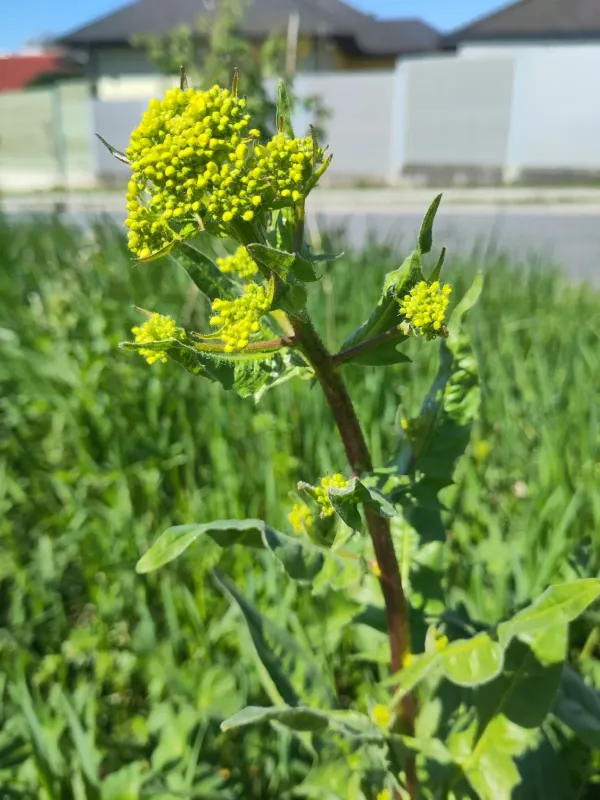
Description
Sowing dates
Bunias orientalis, commonly known as Turkish wartycabbage, is a perennial herbaceous plant belonging to the Brassicaceae family. In agricultural practice, seeding is typically carried out in spring once the soil reaches physical maturity, or in late October as a late-autumn planting.
The sowing depth is maintained at 1–2 centimeters, which is appropriate given the relatively small size of the seeds. Planting is generally done using a drill method with row spacing of 45–60 centimeters to ensure adequate space for plant development.
During the first year, the crop establishes itself slowly, focusing on the formation of a basal leaf rosette and a robust root system. Consequently, thorough soil preparation and weed management are essential during this initial phase to ensure stand establishment.
The seeding rate for a pure stand is approximately 6–8 kilograms per hectare. When using Bunias orientalis in forage mixtures, the rate is adjusted according to the composition of other species and the specific intended use of the field.
Successful germination depends heavily on moisture availability in the topsoil layer. In dry conditions, rolling the soil after planting is recommended to improve capillary moisture transfer to the seeds and support emergence.
Growing requirements
Bunias orientalis is characterized by high ecological plasticity, although it performs best in fertile loamy soils with a neutral or slightly alkaline pH. It is well-adapted to diverse climatic conditions, including arid regions where other crops might struggle.
The crop is highly sensitive to shading, so sowing density must be managed to optimize light interception and photosynthetic productivity. The plant is efficient at utilizing natural precipitation, making it a valuable candidate for regions prone to agricultural risk.
It possesses a deep taproot that penetrates deep into the soil profile, which enhances its drought resistance and allows the plant to access nutrients from deeper horizons. This trait makes it an excellent rotational crop for soil improvement.
Temperature-wise, the plant is quite hardy; mature plants easily survive severe winters with low temperatures, especially when protected by a light snow cover. Early spring regrowth allows for harvesting green forage during times of high nutritional demand.
Optimal development is achieved with sufficient levels of nitrogen, phosphorus, and potassium in the soil. The crop shows a strong positive response to mineral fertilizers, resulting in increased vegetative biomass suitable for silage or hay production.
Yield
The green mass yield of Bunias orientalis can reach 400–600 centners per hectare under proper management. With advanced agronomic practices and irrigation, yields can be even higher, making it a competitive alternative to traditional fodder grasses.
The economic lifespan of a Bunias orientalis stand is approximately 8–10 years, during which it maintains high productivity. Stable yields are guaranteed by the plant's ability to regenerate rapidly after each mowing due to active bud regrowth.
The nutritional quality is rated highly: leaves and young stems contain significant levels of protein, sugars, and carotene. The crop is readily consumed by livestock, particularly cattle and sheep, due to its favorable digestibility profile.
To achieve the maximum yield of nutrients, harvesting should be performed during the budding stage or at the onset of flowering. Delaying the harvest leads to stem lignification, which reduces both the digestibility and the overall quality of the fodder.
Bunias orientalis is also considered a potential candidate for high-quality silage production. The favorable carbohydrate content supports efficient fermentation, which helps preserve the nutritional value of the silage throughout the winter months.
Main diseases and pests
Primary threats to Bunias orientalis stands include specific Brassicaceae pests, such as flea beetles. These insects can cause significant damage to young seedlings during dry and hot weather conditions in the spring.
The crop may be susceptible to Alternaria leaf spot and powdery mildew in cases of high humidity and overcrowded plantings. Fungal infection can lead to premature leaf chlorosis and a decrease in the market quality of the harvested forage.
Other pests, such as the pollen beetle and the cabbage moth, may damage reproductive organs, which is a concern for seed production. Preventive measures include ensuring spatial isolation from other cruciferous crops.
Weed control is critical during the first year of growth, as Bunias orientalis may struggle to compete against aggressive grasses or broadleaf weeds. Herbicide application is only recommended following thorough investigation of local usage regulations.
Agronomic control methods include timely inter-row cultivation, which improves soil aeration and effectively suppresses weed growth. This practice significantly reduces the pest and disease load, improving the overall health of the plantation.
Harvesting
Harvesting for green mass is typically conducted in one or two cuts depending on the geographical zone. The first cut is taken when the plant reaches full rosette development or the beginning of flowering, ensuring a balance between biomass and quality.
When harvesting for seeds, the operation should occur when the lower parts of the pods turn brown. Over-ripening must be avoided to prevent seed shattering, which can lead to substantial yield losses directly in the field.
Hay production involves standard mowing equipment and windrow drying. Due to the high moisture content of the stems, the drying process requires regular turning to ensure uniform moisture removal and prevent spoilage.
For silage production, it is recommended to chop the harvested material into 3–5 centimeter particles. This facilitates tight compaction in silos and silage trenches, helping to displace oxygen and promote the anaerobic conditions necessary for quality fermentation.
After the final harvest cycle, light harrowing of the stubble is recommended to remove dead material and stimulate vigorous spring regrowth. This management practice helps maintain high stand productivity over the long term.