
Hexasepalum teres
Hexasepalum teres (Walter) J. H. Kirkbr.
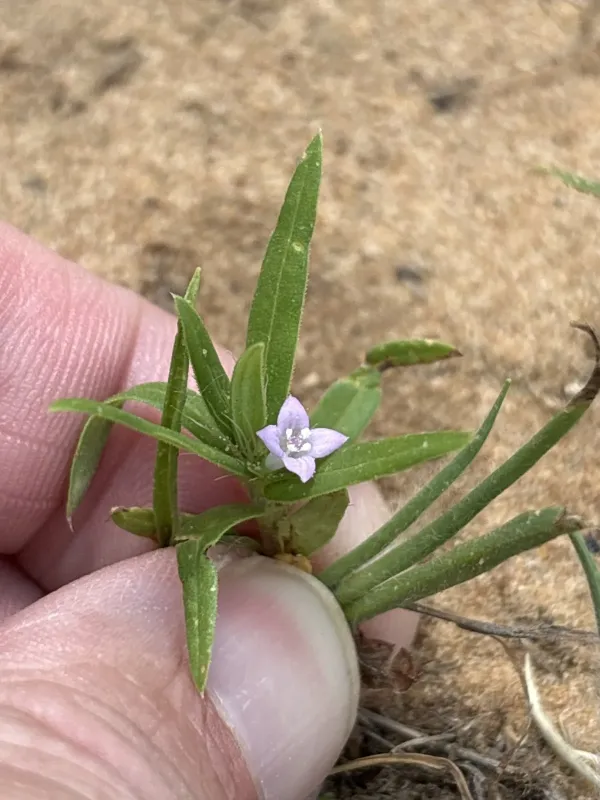
Description
Sowing dates
Hexasepalum teres is an annual herbaceous plant belonging to the Rubiaceae family. In agricultural settings, it is often found as a component of natural pastures or a spontaneous colonizer of disturbed field edges.
The life cycle begins in spring as soil temperatures rise, triggering germination. The seeds are small but possess high viability, allowing the plant to rapidly establish itself in suitable environments.
Successful establishment requires shallow sowing or surface distribution, as the seedlings need adequate light to develop their initial vegetative structures. Consistent moisture is critical during the first two weeks of emergence.
The plant exhibits a fast growth rate, typical of ruderal species that quickly complete their life cycle. Phenological development moves rapidly from the seedling stage to flowering, often within a single season.
Propagation is primarily mediated by wind and water dispersal of seeds. When managing this species as a crop, spacing must be monitored to ensure individual plants have access to sufficient nutrients and light.
Growing requirements
This species thrives in open areas with high solar exposure. It prefers well-drained sandy or loamy soils, which mimic its natural habitat characteristics and facilitate healthy root development.
The plant demonstrates remarkable tolerance for poor-quality soils with limited nutrient profiles. It has an adaptive root system that helps it withstand moderate drought conditions common in sandy landscapes.
The optimal temperature for growth ranges between 20 and 30 degrees Celsius. Excessive soil moisture or prolonged waterlogging can be detrimental and may lead to root health issues.
It adapts well to a wide range of soil pH levels, specifically within the neutral to slightly acidic range. It does not require intensive fertilization, making it a low-input species in certain management systems.
Field management should prioritize maintaining loose soil structures to encourage rooting. Minimal disturbance is usually sufficient to maintain a healthy population in non-competitive environments.
Main diseases and pests
Fungal pathogens represent the primary threat to the crop, especially in conditions characterized by high humidity or stagnant air. Leaf spot diseases can significantly reduce the photosynthetic capacity of the plant.
Various insect pests, including mites and leaf-feeding larvae, may cause damage during peak vegetative growth. While usually manageable, heavy infestations can lead to stunted growth and reduced biomass.
Interspecific competition from aggressive invasive weeds is a common issue. If the plant is part of a managed forage mix, weed control measures are necessary to prevent the population from being outcompeted.
Chemical sensitivity is a notable trait, as the species may be harmed by broad-spectrum herbicides. Integrated pest management (IPM) strategies are recommended to maintain plant health without chemical damage.
- Leaf spot fungal infections.
- Infestation by sap-sucking insects.
- Competition from invasive weeds.