
Hermannia
Hermannia L.
Description
Growing requirements
The genus Hermannia (Hermannia L.) is a member of the Malvaceae family. These plants are typically categorized as perennial shrubs, sub-shrubs, or small herbs known for their resilience in harsh environments.
Originating primarily from Southern Africa, these plants are well-adapted to arid and semi-arid climates. They have evolved specific physiological mechanisms to survive in regions with erratic rainfall and nutrient-poor soils.
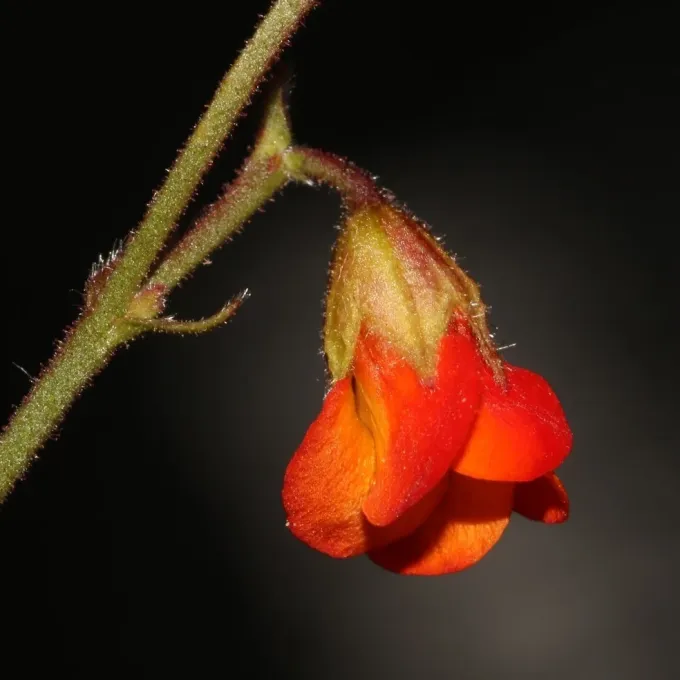
Botanically, they are distinguished by their often pubescent (hairy) foliage and unique, nodding bell-shaped flowers. The blossoms are frequently yellow, orange, or reddish-brown, contributing to their ornamental value.
In cultivation, Hermannia requires a porous, well-draining substrate. They thrive in rocky or sandy soils where water does not linger, as their roots are highly susceptible to rot if kept in saturated conditions for extended periods.
Climate requirements involve full sunlight exposure to maintain a compact growth habit. They are not frost-hardy and are typically cultivated in pots or greenhouses in regions with cold winters, requiring bright light and moderate temperatures.
Main diseases and pests
Primary threats to the health of the plant include pathogens such as Fusarium or Phytophthora, which thrive in waterlogged soil conditions and compromise the root system.
Pest management is focused on controlling spider mites and mealybugs, which are the most common insects to infest these plants in glasshouse environments where humidity and airflow management are challenging.