
Heliotropium undulatifolium
Heliotropium undulatifolium
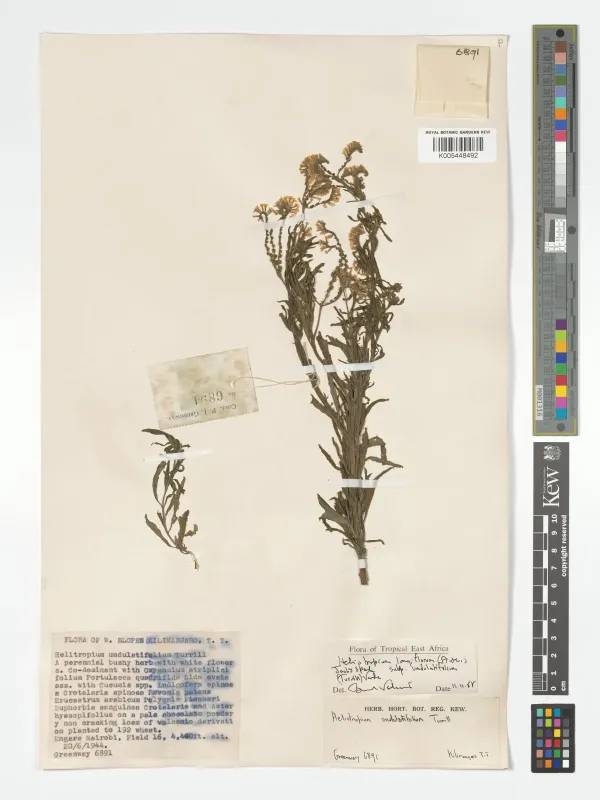
Description
Growing requirements
Heliotropium undulatifolium is a perennial herbaceous plant belonging to the Boraginaceae family. Native to arid regions, this species has evolved to thrive in environments characterized by high solar radiation and limited precipitation, making it a subject of interest for specialized agricultural research in drylands.
The plant exhibits distinct morphological traits, primarily its leaves with undulating margins, which serve as an adaptation to reduce transpiration. The root system is deep and highly efficient at water uptake, allowing the plant to sustain metabolic activities during extended dry seasons in its natural habitat.
Soil requirements for this species are specific: it necessitates well-drained, porous soils, ideally with a sandy or rocky texture. Proper soil aeration is mandatory to ensure root health, as stagnant water in the root zone often promotes the development of fungal infections and leads to physiological stress.
Regarding climatic demands, Heliotropium undulatifolium requires high light intensity and warm temperatures. It is sensitive to frost and waterlogging, meaning that agricultural sites must be chosen in open, sunny locations with minimal risk of nocturnal cold snaps or excessive rainfall accumulation.
In terms of economic use, the plant is primarily researched for its potential as a source of secondary metabolites in pharmaceutical applications and as a candidate for land reclamation in desertified regions. Its resilience makes it a valuable genetic resource for breeding crops capable of surviving climate change conditions.