
Dead Sea Heliotrope
Heliotropium maris-mortui
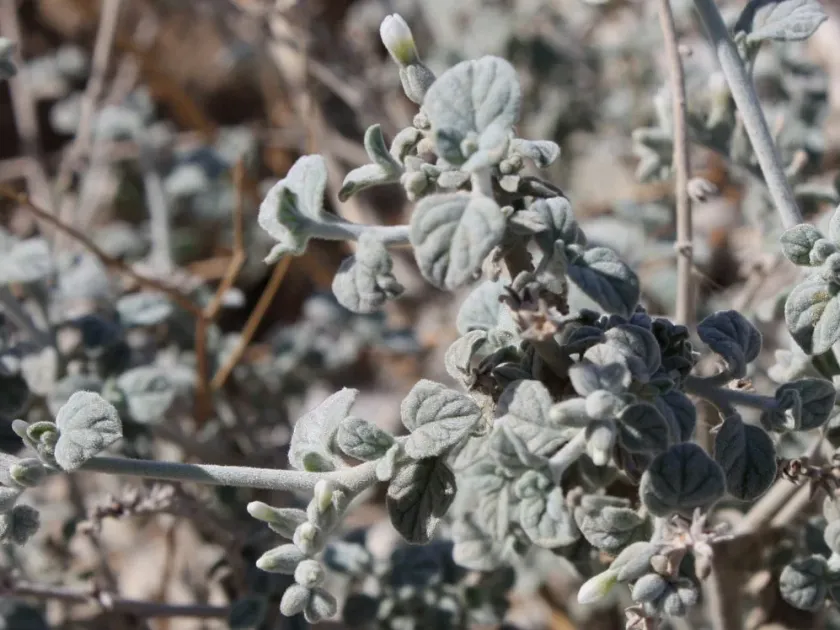
Description
Sowing dates
The Dead Sea Heliotrope (Heliotropium maris-mortui) is a specialized member of the Boraginaceae family, uniquely evolved to thrive in highly saline environments near the Dead Sea basin.
In agricultural practice, sowing is performed in late autumn or early winter to replicate the natural precipitation patterns that facilitate seed germination in the wild.
The seeds are relatively small and require a substrate with high permeability to prevent moisture accumulation around the embryo, which can cause early decay.
Optimal sowing depth is typically shallow, ensuring the seeds are covered by only a thin layer of sand or sandy loam to allow sufficient light penetration for emergence.
Controlled sowing environments often involve using stratification techniques to break dormancy, ensuring a high percentage of successful seedling emergence.
Growing requirements
This plant is a true halophyte, meaning it requires specific saline conditions in the soil to perform its physiological functions optimally during its growth stages.
High levels of solar radiation are essential for the plant, as it is naturally adapted to the intense light intensity characteristic of the Jordan Valley and surrounding areas.
The soil structure must be porous, typically composed of sandy or silty substrates that allow for rapid water drainage, preventing root asphyxiation during rare but heavy rainfall.
Water requirements are relatively low, as the plant possesses xerophytic adaptations that enable it to store water effectively and survive prolonged drought periods.
Nutrient management focuses on maintaining a balance of mineral salts, as excessive organic fertilization can disrupt the delicate saline balance required by the species.
Main diseases and pests
Root rot caused by stagnant water or anaerobic conditions remains the most significant threat to the health and development of the Dead Sea Heliotrope.
Common desert pests such as aphids or certain species of mites can infest the foliage, especially when the plant is stressed by suboptimal irrigation or environmental factors.
Fungal infections can spread rapidly if air circulation is poor, necessitating a well-spaced planting design to prevent the buildup of humidity around the stems.
Symptoms of nutritional imbalance or soil toxicity often manifest as chlorosis, requiring the grower to monitor soil chemistry levels throughout the growing season.
Integrated pest management, including the use of neem-based oils or biological predators, is preferred over synthetic chemicals to maintain the plant's ecological profile.
Harvesting
Harvesting usually occurs once the plant completes its life cycle, typically when the vegetative parts show signs of natural senescence and dehydration.
The timing of the harvest is critical to ensure that the concentration of essential compounds within the plant is at its maximum level before the tissues begin to break down.
Manual harvesting techniques are often employed to ensure that the delicate seed pods are gathered without significant loss due to scattering or mechanical damage.
After harvesting, the biomass should be dried in a shaded, well-ventilated area to reduce moisture content quickly and prevent the growth of storage molds.
Proper storage is required for the harvested material, ensuring it remains in a cool, dry place to maintain the viability of the seeds for future planting seasons.