
Heliotropium curassavicum
Heliotropium curassavicum
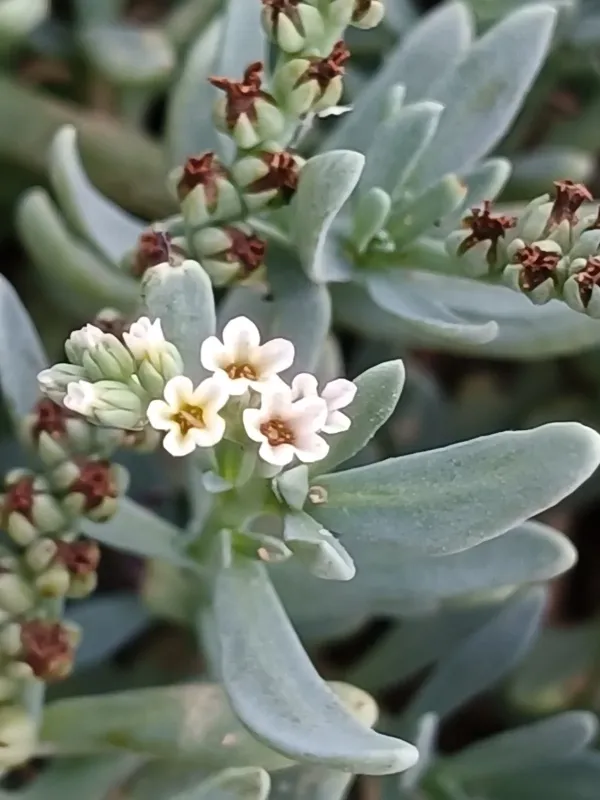
Description
Growing requirements
Heliotropium curassavicum, commonly known as seaside heliotrope, is a perennial herbaceous plant belonging to the Boraginaceae family. It is recognized as a significant halophyte, capable of thriving in highly saline environments where standard crops cannot survive.
The plant originates from the Americas but has successfully colonized coastal areas and arid regions worldwide. It thrives in sunny locations with well-drained sandy or saline soils, demonstrating remarkable tolerance to harsh environmental stressors.
From an agronomic perspective, the plant requires minimal input to grow. It effectively manages osmotic stress through specialized tissues, allowing it to maintain photosynthesis in conditions with low water potential and high mineral concentration.
Botany of the species is defined by its succulent, glaucous-green leaves and its prostrate growth habit. This structure minimizes surface area for evaporation, facilitating its survival in regions with intense solar radiation and frequent droughts.
In agricultural practice, it is primarily used for the remediation of salt-affected soils. Its ability to sequester minerals makes it a valuable biological tool for restoring land health in areas affected by secondary salinization.
Main diseases and pests
The primary threats to this species are pathogens related to excessive moisture, as the plant is highly adapted to dry and saline soil environments.
Root rots are the most prevalent diseases, occurring when the soil structure does not provide adequate drainage, causing water to pool around the base of the plant.
Pest pressures are generally low due to the plant's chemical composition, but infestations of aphids and spider mites can occur in stressed populations.
Monitoring the plant for signs of chlorosis or leaf curling is recommended, as these symptoms often indicate either nutrient deficiency or early-stage fungal infection.
Agricultural management should prioritize maintaining an appropriate soil moisture balance to prevent the proliferation of moisture-loving pathogens, which are the main biological risks to this crop.