
Heinsenia diervillioides
Heinsenia diervillioides
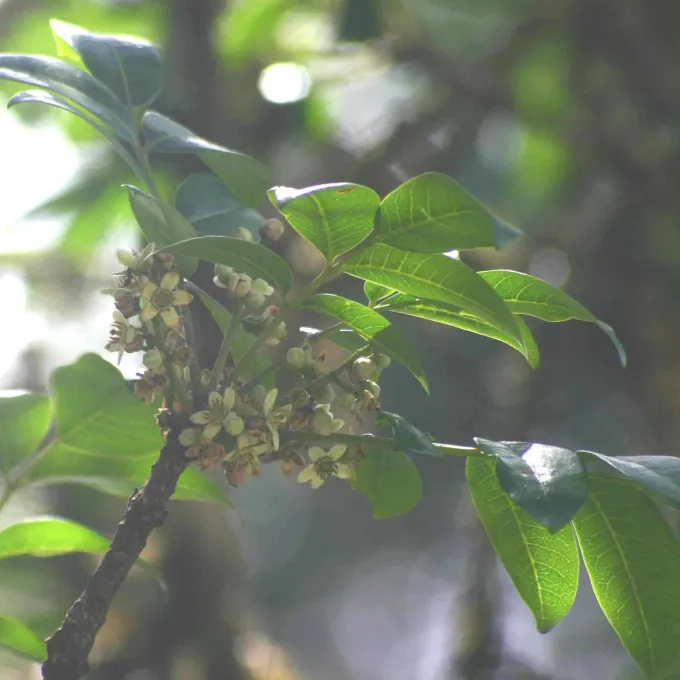
Description
Growing requirements
Heinsenia diervillioides is a distinctive woody shrub belonging to the Rubiaceae family. This species is native to the tropical forests of Central Africa, where it typically thrives in the understory of moist, montane woodland environments.
The botanical profile of the plant features opposite, diervillioid-shaped leaves and specialized inflorescences typical of the Rubiaceae family. It displays a slow-growing habit, emphasizing its adaptation to stable, low-light tropical forest conditions.
Successful cultivation necessitates a climate that mimics its natural habitat: consistent warm temperatures, typically between 20°C and 30°C, and high atmospheric humidity levels are essential for the plant's physiological integrity.
The preferred soil medium is a well-draining, nutrient-rich substrate, preferably mimicking forest floor detritus. Organic acidity is beneficial, provided that water does not accumulate around the roots to prevent rot.
Economically and horticulturally, Heinsenia diervillioides is primarily managed in specialized collections and botanical greenhouses. Its value lies in its genetic diversity and its role as an educational specimen in tropical botany.