
Hazardia squarrosa
Hazardia squarrosa
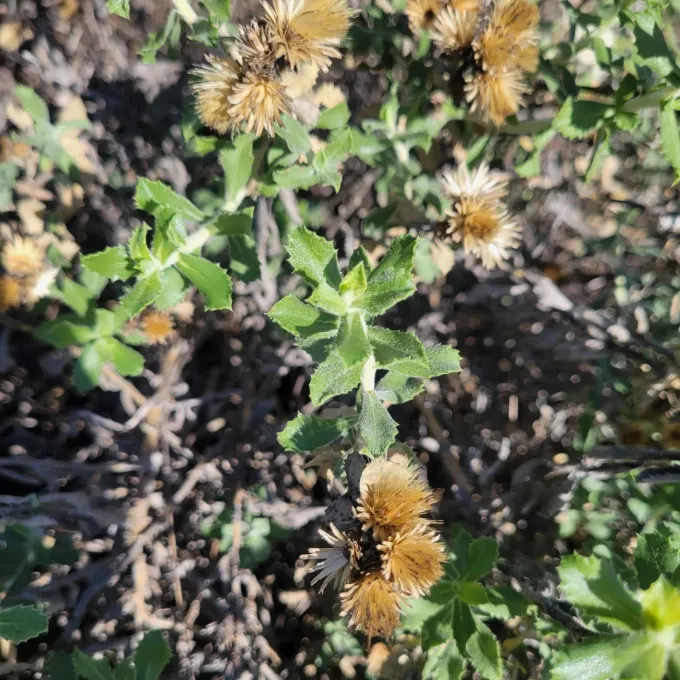
Description
Growing requirements
Hazardia squarrosa, commonly known as the saw-toothed goldenbush, is a perennial evergreen shrub belonging to the Asteraceae family. It is native to the coastal sage scrub and chaparral habitats of Southern California and Baja California.
This species is highly adapted to arid environments, possessing tough, resinous leaves that reduce water loss. These botanical traits allow it to thrive in nutrient-poor, rocky, or sandy soils where other competitive flora may struggle to survive.
Cultivation of this plant requires full sun exposure and excellent soil aeration. It does not tolerate heavy, waterlogged clay soils, as the roots are highly susceptible to root rot and other moisture-related pathogens.
In terms of agricultural and horticultural management, the plant requires minimal fertilization. It is considered a low-maintenance species, ideal for sustainable landscaping projects and xeriscaping where water conservation is a priority.
The plant produces distinctive yellow flower heads during the late summer and fall, acting as an important nectar source for local pollinators during the dry season. It is a vital component of local biodiversity in its native range.