
Gypsophila patrinii
Gypsophila patrinii
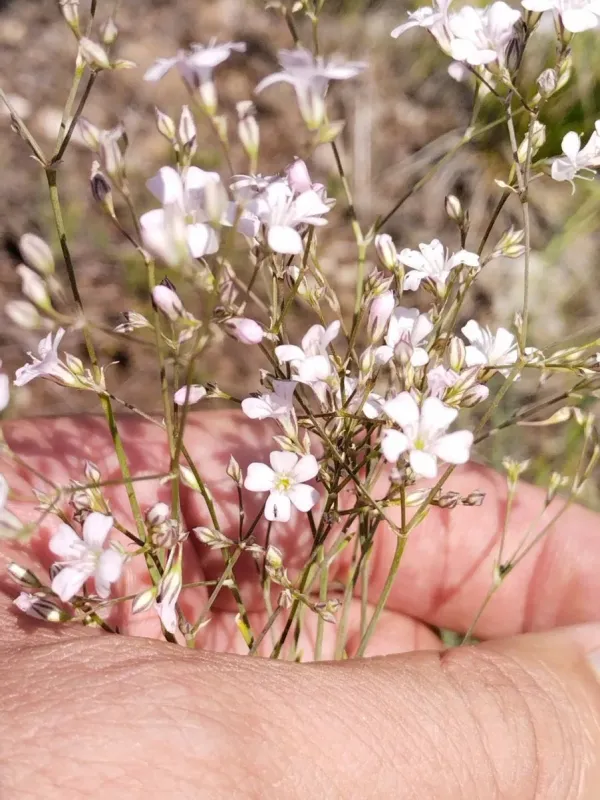
Description
Sowing dates
Sowing of Gypsophila patrinii seeds is typically carried out in spring when the soil warms up to 10-12 degrees Celsius. Ensuring stable moisture in the topsoil is a critical condition for achieving uniform germination.
Late autumn sowing, performed in late October or early November, is also an option, allowing seeds to undergo natural stratification in the soil. This practice often results in earlier and more consistent germination as spring temperatures rise.
Given the very small size of the seeds, they should be mixed with sand before sowing to ensure an even distribution across the field. Planting depth should not exceed 0.5-1 centimeter to avoid preventing emergence.
To establish optimal plant density, it is recommended to use row spacing of 30 to 45 centimeters. This provides sufficient space for root system development and prevents overcrowding of the crop stands.
After sowing, lightly compacting the soil or applying a thin layer of mulch helps preserve moisture. When sowing in containers or nursery beds, ensure effective drainage to prevent the seeds from rotting due to waterlogging.
Growing requirements
Gypsophila patrinii is a typical representative of xerophytic flora belonging to the Caryophyllaceae family. It demonstrates high adaptability to nutrient-poor environments and limited soil moisture conditions.
For successful cultivation, well-drained, light-textured soils with a neutral or slightly alkaline pH are preferred. Heavy clay soils prone to water stagnation are detrimental to the health of this plant.
The crop is highly light-demanding and requires placement in open areas fully exposed to sunlight throughout the day. Insufficient sun exposure leads to elongated shoots and a decrease in both decorative and economic value.
The plant possesses high frost resistance and is capable of surviving harsh winters, especially with sufficient snow cover. It is well-adapted to the arid conditions of steppe and forest-steppe zones, making it suitable for low-fertility soils.
In agronomic management, it is crucial to avoid excessive irrigation and heavy nitrogen fertilization, which can trigger rot diseases. Minimal mineral complex applications at the start of the vegetative phase are sufficient.
Main diseases and pests
The primary threat to the crop is represented by fungal diseases of the root system, which arise due to poor water management and waterlogged soil. Under excessively damp conditions, plants are quickly susceptible to root rot.
Powdery mildew may affect the above-ground parts of the plant during sharp temperature fluctuations and high air humidity in the summer. For preventive purposes, maintaining adequate distance between bushes to ensure air circulation is recommended.
Common pests found on Gypsophila patrinii plantations include aphids and spider mites, especially during dry periods. In cases of mass outbreaks, treatment with specialized insecticides or acaricides is required.
Nematodes may damage roots if the crop is grown in the same location for many years without proper crop rotation. Alternating crops and using pathogen-free planting material is strongly advised.
Weeds pose a significant threat during the early growth stages, as the young culture struggles to compete with faster-growing weed species. Regular weeding and inter-row cultivation are essential parts of proper agronomic care.