
Gypsophila hybrids
Gypsophila hybrids
Description
Sowing dates
In industrial-scale production, Gypsophila hybrids are typically propagated by seeds or seedlings. Seeds are sown in greenhouses or nurseries during March and April to ensure the plants are robust enough for transplanting into open fields once stable, warm weather arrives.
For direct sowing in open fields, the second half of spring is preferred, once soil temperatures reach 15-18 degrees Celsius. Proper seed depth is crucial — no more than 0.5 cm — as Gypsophila seeds require light for successful germination.
Commercial flower farms often use vegetative propagation (cuttings) for hybrid varieties, as seed propagation may not consistently maintain the parent plant's hybrid traits. Cuttings are planted in substrates in late spring or early summer under controlled humidity conditions.
Plant spacing should range between 50 and 70 centimeters to ensure adequate nutrient access and proper air circulation among the bushes. Planting too densely often triggers fungal outbreaks due to moisture accumulation in the root zone.
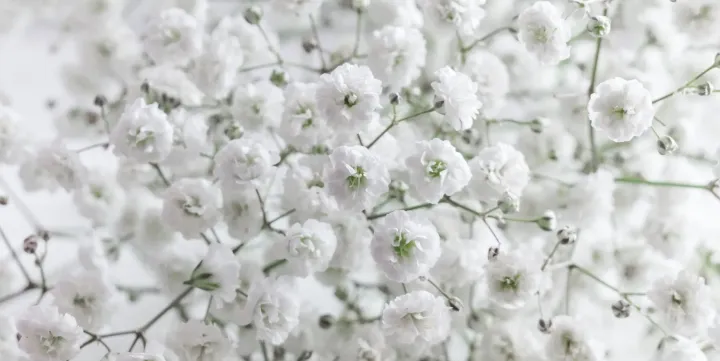
Belonging to the Caryophyllaceae family, Gypsophila hybrids are perennial herbaceous plants characterized by a strong taproot. They are highly valued in commercial floriculture for their delicate, airy inflorescences, which are perfect for bouquet arrangements.
Growing requirements
This crop is light-loving and drought-resistant, so field sites must be selected for maximum sun exposure without any shadowing. Intense lighting directly impacts the density of branching and the intensity of the flowering period.
Optimal growth performance is achieved in light, well-drained, calcareous soils with a neutral or slightly alkaline pH. Gypsophila is extremely sensitive to waterlogging, making a strong drainage layer mandatory in heavy clay soils.
Climatic requirements include moderate air humidity, as excessive rainfall and high humidity make plants susceptible to root neck rot. While the crop is winter-hardy, light protection is recommended in regions with snowless winters.
Irrigation should be regular but moderate, avoiding soil saturation. During active vegetation, apply complex mineral fertilizers while avoiding fresh organic matter, which can cause root burns and encourage disease development.
Systematic weeding and loosening of the soil between rows are necessary to ensure oxygen reaches the root system, which stimulates the development of sturdy flower stalks and extends the productive lifespan of the plantation.
Yield
The yield of Gypsophila hybrids is measured by the number of marketable stems produced per square meter per season. Depending on agricultural management and cultivar traits, each bush can produce between 10 and 30 high-quality stems at peak productivity.
Commercial plantation cycles usually last between 3 to 5 years. After this period, the root system ages, the ornamental quality of the inflorescences declines, and the plantation requires full replacement.
Increasing marketable output is achieved by pinching the tips of the shoots, which promotes branching and increases the total number of flower-bearing twigs per plant.
The purity of the cultivar and the use of high-quality propagation material are the primary determinants of product marketability, including inflorescence density, petal fullness, and flower stalk length.
Harvesting inflorescences at the semi-open stage allows plants to conserve resources for recovery, which positively impacts yields in subsequent years.
Main diseases and pests
Rust, which appears as brown spots on leaves, and gray mold, occurring under improper moisture conditions, pose the greatest threats to Gypsophila crops.
Root-knot nematodes are among the most serious pests, as they attack the root system, causing growth stunting and potential plant death. Preventative measures, including soil disinfection, are used for control.
Aphids and spider mites may infest young shoots, draining sap and hindering flower stalk development. Regular crop scouting and timely treatment with insecticides and acaricides are essential to minimize losses.
Disease prevention relies on strict crop rotation, ensuring the crop does not return to the same plot for at least five years. It is also important to prevent foliage from contacting damp soil during mulching.
If signs of viral diseases are detected, affected plants must be removed and destroyed immediately, as no effective chemical treatments for viruses are available for this crop.
Harvesting
Harvesting is conducted when at least half of the flowers in an inflorescence are open. Harvesting too early prevents the flowers from fully opening, while late harvesting reduces ornamental quality due to early wilting.
For commercial use, stems are cut with sharp shears during the morning hours when plants are fully hydrated. Stems are placed in water immediately after cutting to prevent moisture loss.
Transport requires maintaining proper temperature conditions and protection from direct sunlight. Gypsophila hybrids handle the drying process well, so a significant portion of the harvest is often processed into dried flowers for floristry.
Post-harvest preparation involves cleaning the lower foliage and bundling stems according to market quality standards.
Cut flowers should be stored in specialized cooling chambers at 2-4 degrees Celsius, which maintains their commercial appearance for up to two weeks.