
Gymnopogon floridanus
Gymnopogon floridanus
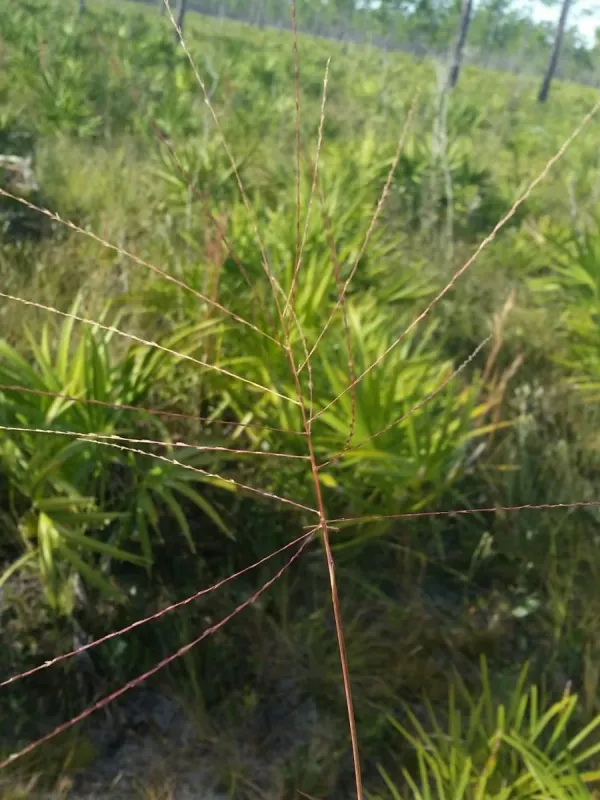
Description
Growing requirements
Gymnopogon floridanus, commonly known as Florida skeletongrass, is a perennial herbaceous plant belonging to the grass family Poaceae. Native primarily to the southeastern United States, it is well-adapted to specific sandy and often nutrient-poor environments found in Florida and surrounding regions.
The plant exhibits remarkable tolerance to xeric conditions, meaning it thrives in habitats where water is limited for extended periods. Its physiological adaptations allow it to survive in well-drained, sandy soils where many other grass species would fail to establish a healthy root system.
Environmental requirements for this species include high solar irradiance, as it does not tolerate competition from shaded areas or dense canopy cover. It is typically found in pine flatwoods and dry, open savannas where the soil composition is conducive to its growth patterns.
From an agronomical standpoint, Gymnopogon floridanus is not widely cultivated as a primary food or fodder crop due to its modest biomass production compared to intensive agricultural grasses. However, it plays a vital role in maintaining the integrity of native grasslands and local ecosystems.
Successful management of this plant in a broader context requires understanding its low nutrient requirements and its sensitivity to excessive fertilization or overgrazing, which can easily displace it from its natural habitat in favor of more aggressive species.