
Gymnarrhena micrantha
Gymnarrhena micrantha
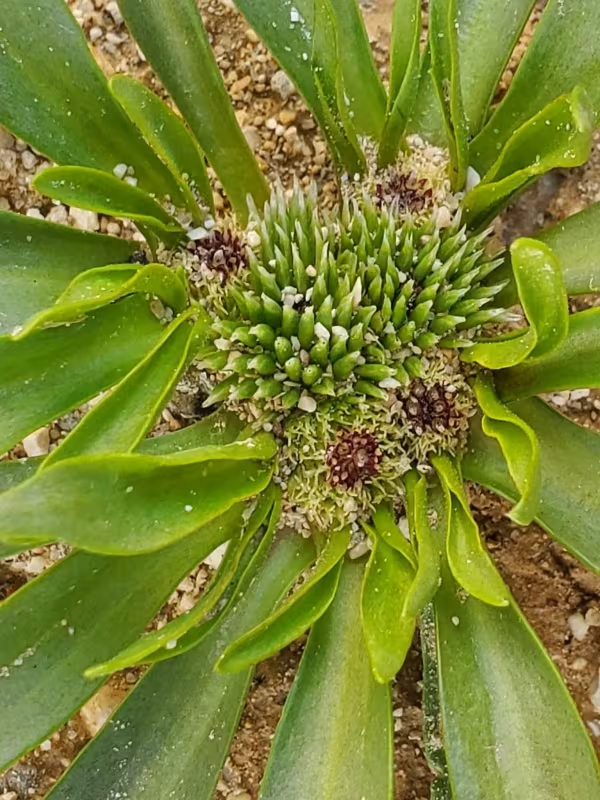
Description
Sowing dates
Gymnarrhena micrantha is an annual herbaceous plant whose life cycle is perfectly synchronized with the brief periods of spring rainfall in arid regions.
The plant relies on moisture triggers to initiate germination, making the sowing timing dependent on the anticipation of adequate precipitation.
For cultivation purposes, replicating the desert spring environment is essential to ensure that the seedlings establish themselves before the onset of extreme heat.
The seeding depth should be minimal, as the seeds have limited energy reserves and require proximity to the surface to emerge successfully after rain.
Spacing must be sufficient to allow the plant to develop its rosette leaves, which are critical for capturing light during the short growth window.
Growing requirements
As a member of the Asteraceae family, Gymnarrhena micrantha exhibits extraordinary tolerance to drought and high salinity, typical of desert ecosystems.
The species thrives in sandy, gravelly, or saline soils that are well-drained, as it cannot tolerate waterlogging or high levels of organic matter.
Light intensity is the primary driver of its development; therefore, the crop must be grown in fully open sites without any surrounding vegetation cover.
Temperature range tolerance is broad, as the plant is adapted to survive the significant temperature fluctuations between day and night in its native range.
The soil profile must allow for the expansion of geocarpic structures, meaning that light-textured substrates are significantly more favorable than heavy clays.
Main diseases and pests
The main biological threat to this species is habitat destruction and overgrazing, which disrupts the natural reproductive cycle of the populations.
Pathogenic threats are relatively low due to the harsh conditions the plant occupies, though root rot can emerge in artificial conditions with improper drainage.
Competitive stress from opportunistic weeds can occur if the local rainfall exceeds the long-term average, displacing the slower-growing Gymnarrhena.
Ground-dwelling pests or soil-borne larvae can occasionally damage the roots or geocarpic capsules, leading to a loss in potential seed yield.
Abiotic stresses, such as extreme heat spikes occurring before the seed set, can cause the plant to enter senescence prematurely and reduce viability.
Harvesting
The defining characteristic of this crop is its geocarpy, producing both aerial flower heads and underground capsules containing seeds.
Harvesting the aerial portion is straightforward, involving the collection of flower heads once they have turned dry and mature.
Collecting the underground seeds requires careful soil excavation, which is a labor-intensive but essential process for recovering the total yield.
Post-harvest management involves drying the seed material thoroughly to ensure longevity and prevent fungal growth during storage in humid climates.
Efficient separation of seeds from soil particles remains a technical challenge that is critical for maximizing the economic output of this unique crop.