
Guarea cedrata
Guarea cedrata (A. Chev.) Pellegr.
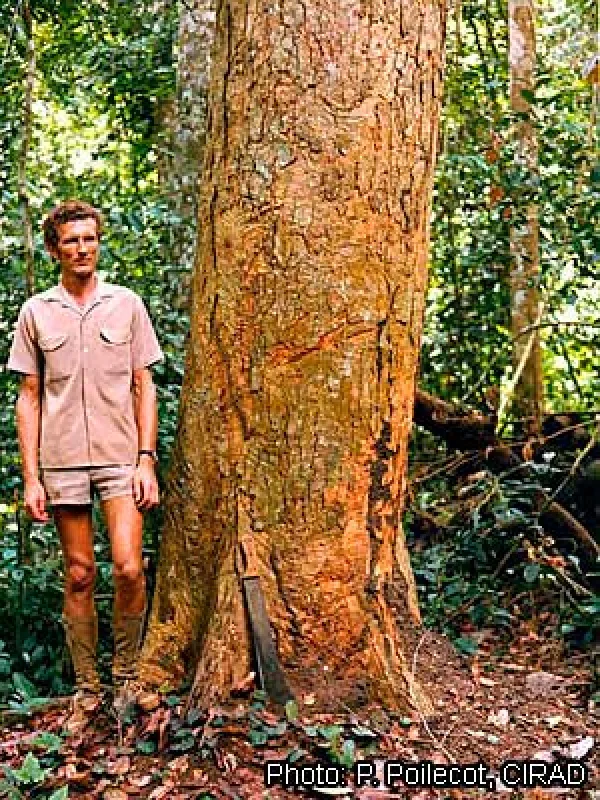
Description
Growing requirements
Guarea cedrata is a large evergreen tree belonging to the Meliaceae family. In its natural environment, it can reach heights of up to 45 meters, featuring a robust trunk with grayish-brown bark.
This species primarily grows in the tropical rainforests of West and Central Africa. It prefers moist, well-drained soils with high organic matter content, which are typical for lowland ecosystems.
The tree is demanding regarding climatic conditions: it requires consistently high air temperatures and significant annual rainfall. It performs poorly in both prolonged dry periods and direct full exposure in its juvenile stages.
Industrial cultivation techniques are mostly limited to reforestation efforts. Propagation is typically achieved through seeds, which require careful preparation as they tend to lose viability quickly after harvest.
Economic use of the species focuses on obtaining high-quality timber, often marketed as "African cedar" or "bossé." It is valued for its pleasant fragrance, durability, and resistance to wood-boring insects, making it a premium material for carpentry.
Main diseases and pests
Major pests affecting young plantations include various stem borers and caterpillars that feed on foliage. In their natural habitat, the trees are susceptible to fungal infections if humidity remains excessively high.
Threat management requires regular monitoring of the sanitary condition of forested plots. An important preventive measure is maintaining optimal planting density to ensure adequate air circulation.
Wood diseases can occur when bark is damaged, allowing pathogenic spores to penetrate the tree. It is highly recommended to avoid mechanical trunk injuries during maintenance operations in nurseries.
To protect against pathogens, preventive spraying is applied during the first years of seedling growth. An integrated pest management system includes biological controls aimed at maintaining ecological balance.
Climatic stress also poses a significant threat: sharp changes in precipitation patterns negatively affect the tree's growth rate. Minimizing these risks is possible by selecting sites with stable microclimates.