
Graderia scabra
Graderia scabra
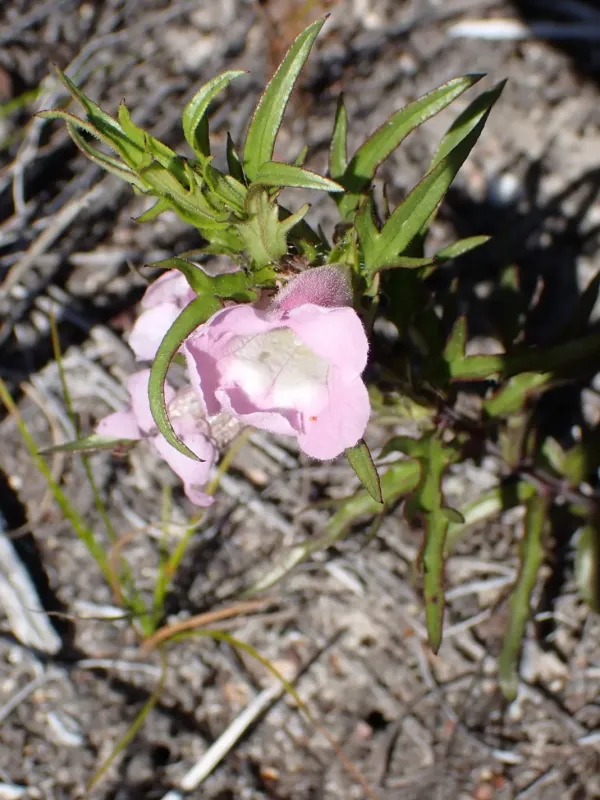
Description
Growing requirements
Graderia scabra is a distinctive plant species belonging to the Orobanchaceae family. As a hemiparasite, it relies on the root systems of host plants to acquire essential nutrients, which makes its botanical management highly specialized compared to autotrophic crops.
The plant originates from Southern Africa, where it thrives in grasslands and savannah-like environments. Its evolutionary history has equipped it with mechanisms to survive in competitive plant communities where water and nutrients are limited.
Morphologically, the plant is identified by its rough, scabrous stems that provide structural integrity in open habitats. The leaves are typically linear or lanceolate, arranged oppositely to maximize sunlight interception while maintaining a compact growth habit.
In terms of soil requirements, Graderia scabra prefers well-drained, nutrient-poor, or moderately fertile substrates. It cannot tolerate waterlogging, which often leads to root collar rot and prevents the successful establishment of parasitic connections.
Climatic preferences include steady, moderate temperatures and high light intensity. It is essential to ensure that the surrounding vegetation includes suitable host species, as the plant's development is directly proportional to its ability to form haustorial connections with roots.
Main diseases and pests
Pathogenic fungi represent the primary threat to the health of Graderia scabra. High humidity levels often trigger outbreaks of leaf spot and stem rot, which can decimate local populations if not managed quickly.
Insect pests, particularly sap-sucking species, frequently target the young shoots. These insects weaken the host plant as well, creating a cascading negative effect on the Graderia individuals that rely on that host.
Chemical control must be applied with extreme caution. Many synthetic herbicides are lethal to the host-parasite relationship, effectively killing the Graderia even if the intention is only to control secondary weeds.
Competition from fast-growing, non-host weeds can prevent Graderia from receiving adequate light. When shaded, the plant experiences etiolation, becomes thin, and loses its natural resistance to environmental stress.
Environmental fluctuations, especially unseasonal heavy rains, are major threats. Because the plant's strategy is optimized for specific stable environments, rapid climate shifts can lead to significant biomass loss.