
Gonatanthus pumilus
Gonatanthus pumilus
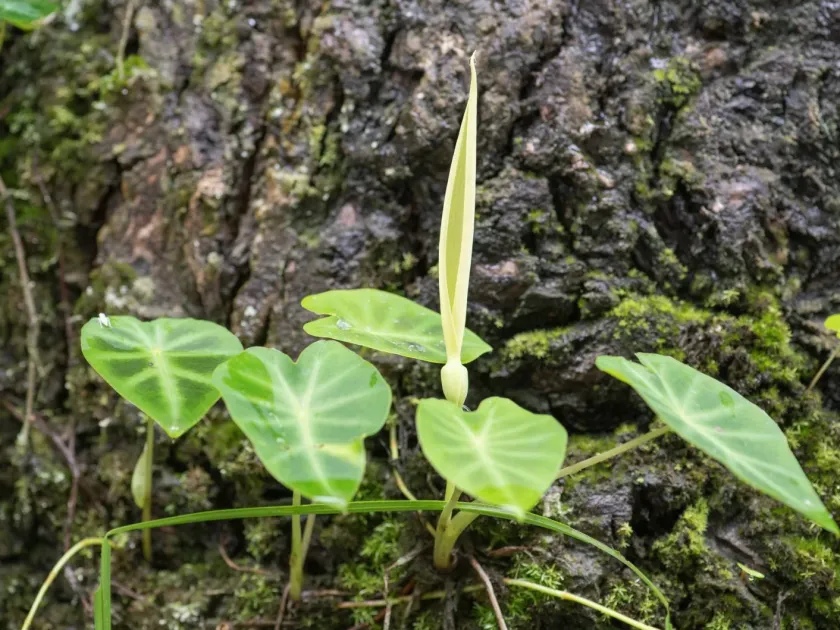
Description
Growing requirements
Gonatanthus pumilus is a perennial herbaceous plant belonging to the Araceae family, native to the tropical and subtropical regions of Southeast Asia, including the Himalayan foothills.
The plant thrives in nutrient-rich, well-draining soils with consistent moisture levels. Agronomic success depends on mimicking its natural understory environment, which requires high humidity and filtered, bright light.
In terms of climatic preferences, it favors temperatures ranging between 18 and 28 degrees Celsius, avoiding exposure to frost or direct, harsh sunlight which may dehydrate the foliage.
Botanically, it is recognized for its tuberous rhizome and the unique production of bulbils on leaf stalks, which the plant utilizes for propagation in its wild habitat.
Economically, the species is primarily utilized as an ornamental plant in botanical gardens and domestic indoor horticulture, valued for its distinctive architectural leaf form.
Main diseases and pests
The main agronomic challenges involve fungal infections that stem from waterlogged soil, which can rapidly lead to tuber rot if drainage systems are insufficient.
Pest pressures primarily include spider mites and aphids, which frequently infest plants in dry indoor environments where humidity levels are not properly maintained.
Management strategies require careful observation and the implementation of appropriate pest control measures, such as systematic application of mild horticultural oils or targeted pesticides.
Preventative measures are essential, including the use of sterilized potting mixes and maintaining appropriate airflow around the foliage to minimize fungal pathogen development.
For large-scale cultivation, regular scouting for early signs of disease is recommended to prevent widespread losses within the crop cycle.