
Gomortega keule
Gomortega keule
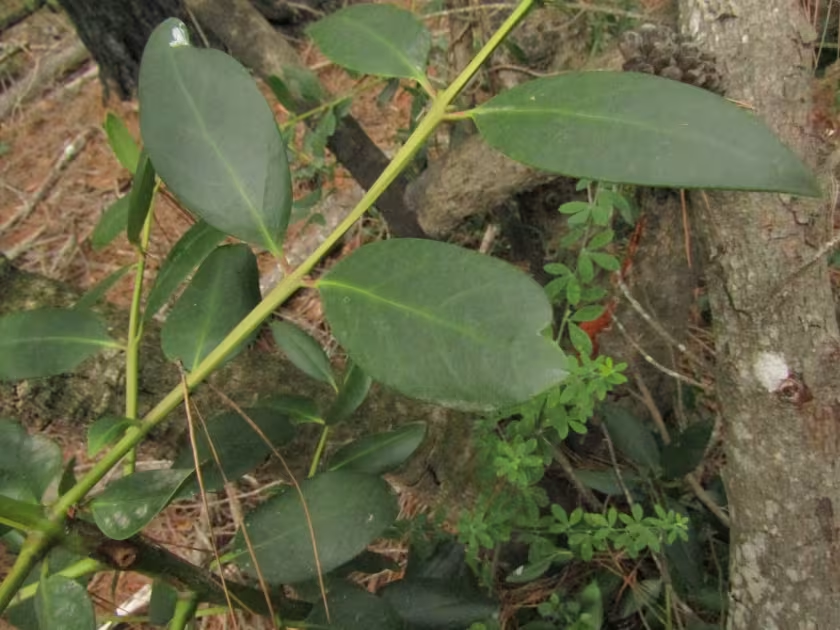
Description
Sowing dates
Gomortega keule is an endemic and rare species, so its agricultural propagation is primarily performed via seeds. Fruits are harvested at the end of the ripening season once they reach full maturity to extract the seeds.
The seeds have low germination rates and require prolonged stratification to break embryonic dormancy. It is recommended to sow them in protected environments or nurseries with well-drained substrates to ensure an optimal temperature range.
In the natural environment, the germination process is often delayed due to the hard seed coat. In agricultural settings, scarification techniques are practiced to accelerate emergence and increase the yield of high-quality seedlings.
Transplanting young seedlings into open ground should only occur after they reach 2-3 years of age. The plant is extremely sensitive to root system damage, making container-based methods the preferred option for maintaining root integrity.
Intensive cultivation is currently restricted by its status as an endangered species in Chile. Large-scale commercial plantations do not yet exist, and current plantings are primarily experimental or botanical in nature.
Growing requirements
The crop belongs to the Gomortegaceae family and is the sole representative of its genus. It is an evergreen tree that favors the specific Mediterranean climate of the coastal regions in central Chile.
The plant is demanding regarding soil moisture but poorly tolerates waterlogging. The optimal growth conditions include deep, organic-rich, and well-aerated loamy soils with a neutral or slightly acidic pH level.
The tree exhibits high shade tolerance when young, which allows it to be integrated into agroforestry systems. Mature specimens can reach heights of up to 20 meters, forming a dense crown with coriaceous leaves.
Temperature requirements are moderate; the tree does not handle extreme heat or heavy frost well. It is adapted to mild winters and humid summer periods, typical of its native range in the mountain forests.
Given its limited distribution, successful cultivation requires maintaining microclimatic conditions that mirror the subtropical mountain forests of Chile.
Yield
The fruits of Gomortega keule are edible, yellow-orange drupes with a spherical shape. They are prized for their sweet, aromatic flavor, reminiscent of a cross between quince and peach, and are often consumed fresh or processed.
The yield of a mature tree is significant, though the period to reach the fruiting stage is quite long. The plant begins to produce fruit a decade after planting, which complicates its integration into active commercial trade.
The fruits contain large seeds that account for a significant portion of the fruit weight. In the food industry, they are used to prepare jams, liqueurs, and preserved desserts with a unique flavor profile.
Harvesting is performed manually, as the fruits have a delicate texture and are easily damaged by mechanized picking methods. After harvest, fruits require prompt distribution or processing due to their limited shelf life.
Future prospects include breeding programs aimed at improving flavor profiles and increasing yield, which could make the crop more viable for commercial farming operations.
Main diseases and pests
The main threats to Gomortega keule populations are anthropogenic impacts, including deforestation and excessive livestock grazing. In agricultural conditions, the plant is susceptible to fungal root diseases.
Poor soil aeration and waterlogging lead to the development of root rots, which is a critical issue for young saplings. Prevention involves the use of fungicides and strict adherence to irrigation schedules.
Pests affecting the foliage include specific Lepidoptera and scale insects common to subtropical forests. Regular monitoring of the plantations allows for the containment of infestations at an early stage.
The biological vulnerability of the species is also exacerbated by low genetic diversity in existing populations, making it susceptible to new types of pathogens spreading due to climate change.
- Root rot (Phytophthora)
- Scale insects and mealybugs
- Leaf-eating pests
- Branch dieback due to micronutrient deficiency
Harvesting
The harvest period occurs at the end of the summer and the beginning of the autumn season in the Southern Hemisphere. Fruits ripen unevenly, so picking is often carried out in several passes as they acquire a characteristic yellow hue.
Maturity can be determined by a change in skin texture and the emergence of a distinct sweet aroma. Unripe fruits are astringent and are not suitable for consumption without prior thermal processing.
Transportation of the fruit must be carried out in soft packaging to prevent crushing. Due to high moisture and sugar content, they ferment rapidly, requiring the product to be cooled to +5...+8 degrees Celsius.
In agricultural practice, harvested fruits are sorted by size and appearance. The largest specimens are sold fresh, while smaller or damaged ones are redirected for industrial processing.
Prolonged storage of the fruit without quality loss is virtually impossible under standard conditions, so farmers aim to process the bulk of the harvest within 48 hours of picking.