
Glaucocystis nostochinearum
Glaucocystis nostochinearum
Description
Growing requirements
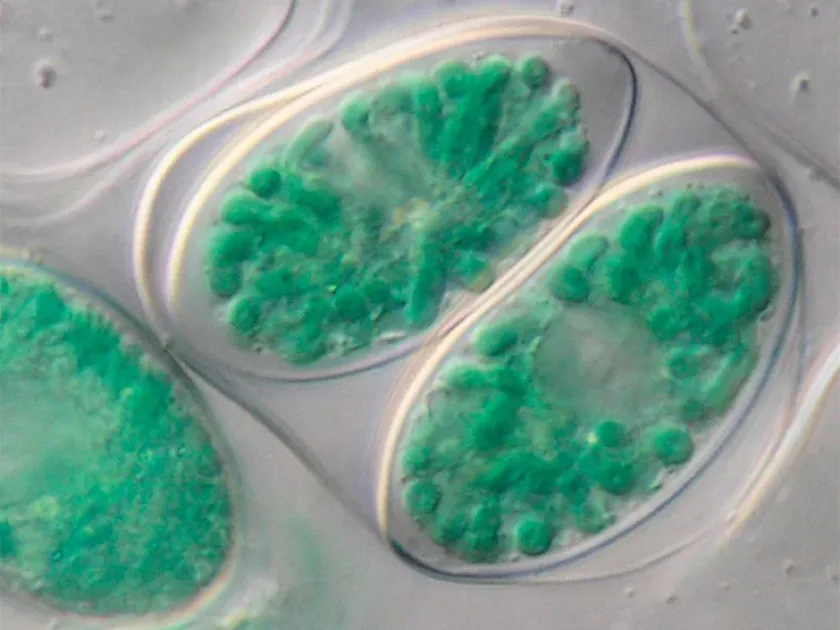
Glaucocystis nostochinearum is a rare species of freshwater microalgae belonging to the phylum Glaucophyta. While not a commercial agricultural crop, it is of immense interest in phycology and evolutionary biology due to its unique endosymbiotic structures known as cyanelles.
The organism thrives in stagnant or slow-moving freshwater environments. Its primary ecological requirement is a stable aquatic habitat with balanced mineral content and moderate light intensity, which supports the symbiotic cyanelles responsible for photosynthesis.
From a biological standpoint, the culture is characterized by its distinct colonial form, where cells are enclosed within the old cell wall of the parent. This architectural feature makes it a primary subject for understanding cell wall synthesis and cellular reproduction in primitive eukaryotes.
Optimal growth conditions require controlled laboratory environments, as the organism is highly sensitive to fluctuations in water chemistry. Maintaining a precise pH balance and providing essential micronutrients are critical for preventing cell mortality in closed culture systems.
The potential for future industrial application lies in its photosynthetic mechanisms, which offer insights into increasing efficiency in bio-production. However, current cultivation is restricted to research laboratories aiming to map the genome and metabolic pathways of these organisms.