
Gelidium corneum
Gelidium corneum
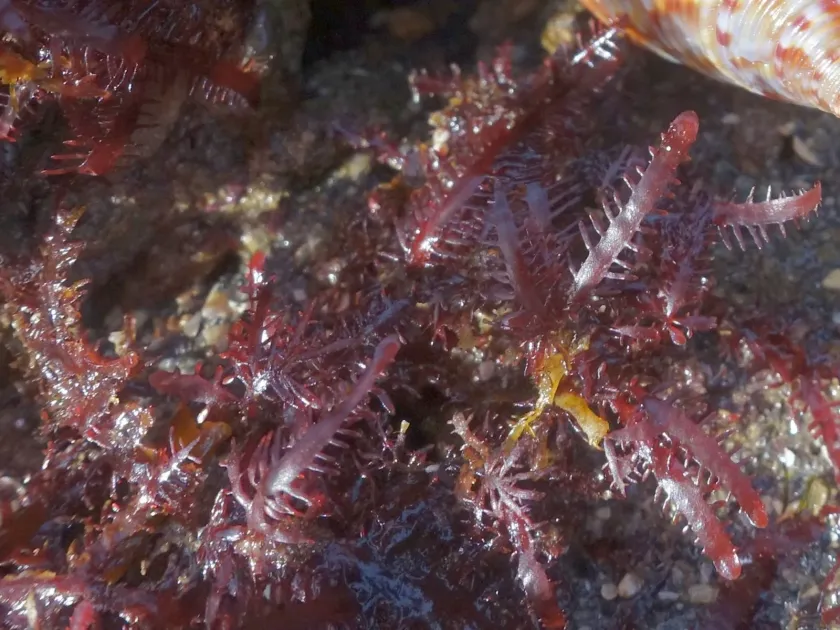
Description
Sowing dates
Gelidium corneum is a highly valued red seaweed species belonging to the Gelidiaceae family. It is predominantly cultivated in marine environments for its ability to produce high-quality agar, a gelatinous substance used in various industries.
The cultivation process involves the selection of high-yield strains and their vegetative propagation. Fragments of the thallus are secured onto artificial substrates, such as ropes or synthetic meshes, which are then deployed in controlled marine areas.
Success in sowing depends on the placement of the substrate at the appropriate depth. This ensures that the seaweed receives the optimal balance of sunlight and nutrient-rich water flow required for early establishment.
Maintaining the correct density is crucial during the initial stages. Overcrowding can lead to resource competition, while sparse planting may allow invasive epiphytic species to colonize the substrate prematurely.
Monitoring the growth of initial thalli is performed regularly to ensure adherence to the rope structure. If necessary, manual re-tying or adjustments to the depth are made to optimize the conditions for rapid vegetative growth.
Growing requirements
Temperature regulation is fundamental to the survival and productivity of Gelidium corneum. The species thrives in temperate waters, typically ranging between 15°C and 25°C, where it maintains optimal metabolic rates.
Light availability is the primary driver of photosynthesis. In marine farming, turbidity levels must be kept low, as reduced transparency significantly inhibits the growth rate and structural integrity of the seaweed.
A consistent water current is required to facilitate nutrient exchange. Gelidium corneum lacks a vascular system and relies on the constant movement of water to deliver nitrates and minerals while removing metabolic waste.
Water quality parameters, including salinity and pH levels, must be kept stable. Fluctuations outside of the tolerance range can lead to physiological stress, resulting in the whitening of the thallus and a decrease in agar content.
Farms must be located away from industrial or agricultural discharge points. Because these seaweeds act as biological filters, they are prone to heavy metal accumulation if the surrounding water is polluted.
Yield
The yield of Gelidium corneum is determined by the environmental conditions and the intensity of farm management. In a well-maintained system, harvesting can occur multiple times within a single growing season.
Productivity is measured by the biomass generated per unit of substrate. Advanced farming techniques now include the use of nutrient-enriched zones to accelerate growth cycles and maximize output for agar extraction facilities.
Seasonal factors play a significant role in determining the concentration of polysaccharides in the harvested biomass. Agronomists often time the harvest to coincide with periods when agar quality and yield are at their biological peak.
Modern aquaculture farms use genetic selection to improve yield stability. By isolating fast-growing strains, farmers can significantly increase the economic return on their marine plots.
Regular harvesting data provides insights into the recovery capacity of the population. This allows for precise forecasting of raw material availability for downstream processing industries.
Main diseases and pests
Pest management is a critical aspect of seaweed farming. Small crustaceans and various species of marine snails are known to graze on the tender parts of the Gelidium thallus, causing significant yield losses.
Epiphytic algae are considered the primary competitors in marine agriculture. If not managed through regular maintenance, these organisms can rapidly overgrow the Gelidium, blocking sunlight and reducing the overall vitality of the crop.
Pathogenic bacteria can cause localized necrosis, which often appears as soft, discolored spots on the thallus. Immediate removal of affected areas is the standard protocol to prevent the spread of the infection.
Physical damage from storms or strong currents represents a major threat to offshore farms. Submerged infrastructure must be designed to withstand high wave energy to protect the standing crop.
- Overgrowth by opportunistic algae
- Grazing by marine invertebrates
- Bacterial infections and tissue softening
- Severe storm-induced damage
- Nutrient imbalance in the water column
Harvesting
Harvesting is typically performed using manual or semi-automated cutting tools. A key rule is to leave a portion of the basal thallus intact, which acts as a starting point for the regeneration of new growth.
Post-harvest handling begins with the immediate removal of epibionts and debris from the collected biomass. This step is essential to ensure that the raw material meets the purity standards required for food-grade agar.
The harvested product undergoes a series of washing cycles in fresh or low-salinity water to remove excess salt and silt. Cleanliness is paramount to prevent degradation during the drying and storage stages.
Drying is the final processing step, carried out either by solar exposure or industrial dryers. The moisture content must be reduced significantly to prevent microbial growth and chemical degradation of the agar structures.
The final dried product is then packaged and transported to processing plants. Here, through chemical extraction processes, the raw seaweed is transformed into the refined agar-agar used worldwide in food, medicine, and research.