
Galinsoga parviflora
Galinsoga parviflora Cav.
Description
Growing requirements
Galinsoga parviflora, commonly known as gallant soldier, belongs to the Asteraceae family. Originating from South America, this annual herb has naturalized worldwide, becoming a prominent weed in agricultural fields, vegetable gardens, and disturbed habitats.
The plant thrives in nutrient-rich, moist, and well-drained soils. It shows a strong preference for cultivated areas where nitrogen availability is high, making it a common competitor in row crop systems such as tomatoes, potatoes, and corn.
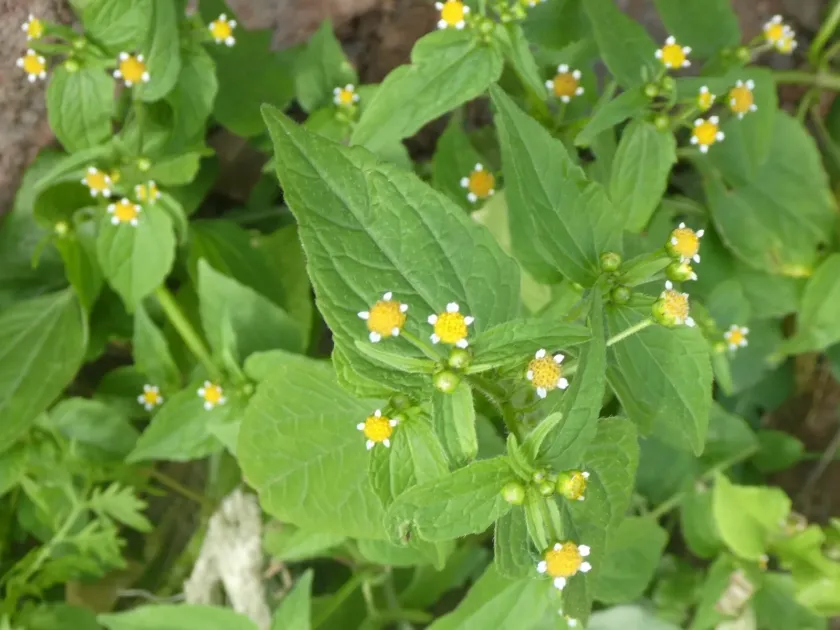
Botanically, it is characterized by its branching stems that can grow up to 75 cm tall. The leaves are opposite, ovate-lanceolate, and serrated along the margins. The small flower heads contain white ray florets and yellow disk florets, which are distinguishing traits.
A major biological feature of this species is its extremely rapid growth cycle. It can transition from germination to seed production in as little as 30 to 40 days, allowing multiple generations to overlap within a single growing season.
Management requires persistent agricultural practices. Due to its shallow roots, hand pulling or mechanical cultivation is effective if performed before the plant reaches the flowering stage, as even pulled plants with flowers can successfully seed.
Main diseases and pests
Galinsoga parviflora serves as a significant reservoir for various plant pathogens. It is known to harbor late blight, which poses a severe risk to crops like potatoes and tomatoes, especially in humid conditions.
Furthermore, it acts as an alternate host for several insect pests, including aphids and whiteflies. These insects utilize the weed as a bridge, allowing them to maintain populations throughout the season and spread viruses to valuable crops.
Allelopathic effects are another area of concern. The plant releases chemicals into the soil that can inhibit the germination and development of neighboring seedlings, thereby reducing crop uniformity and vigor.
The plant's ability to survive in a wide range of moisture conditions makes it difficult to eliminate completely using traditional crop rotation alone. Integrated pest management (IPM) is essential to minimize the seed bank in the soil.
Effective control involves combining chemical, mechanical, and cultural methods. Rotating crops, applying mulch, and ensuring clean equipment are vital steps to prevent the spread of this invasive species across agricultural plots.