
Galbulimima belgraveana
Galbulimima belgraveana
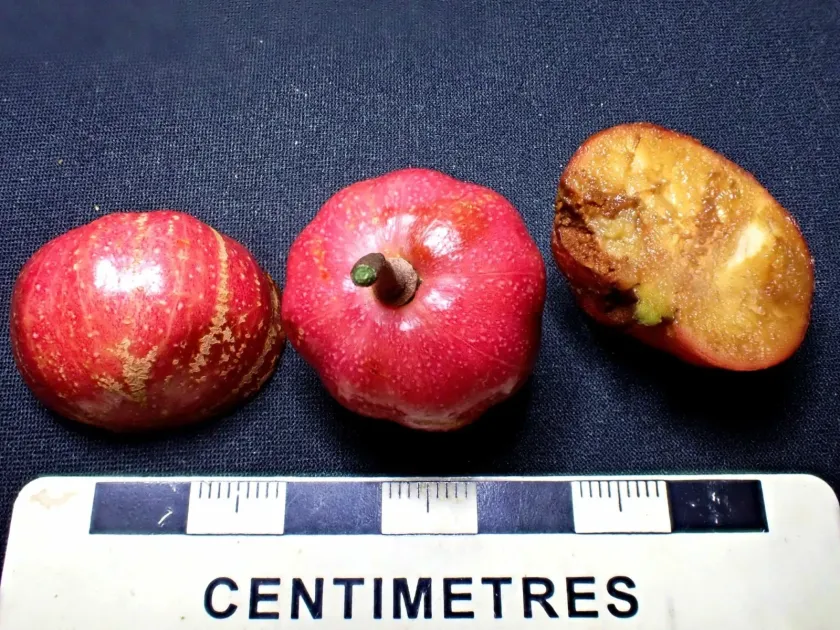
Description
Growing requirements
Galbulimima belgraveana is a rare tropical tree species belonging to the family Himantandraceae. It is native to the rainforest regions of Papua New Guinea, Australia, and the Solomon Islands, thriving in humid environments.
The plant requires high humidity, consistent tropical temperatures, and deep, nutrient-rich soils with good aeration. It is typically found in the understory of dense rainforests, where it benefits from high moisture levels throughout the year.
Botanically, it is known for its primitive flower structure, lacking standard perianth parts. The leaves are leathery and alternate, contributing to the tree's resilience in its competitive ecosystem.
Cultivation of Galbulimima belgraveana is largely restricted to botanical gardens and research facilities due to its specialized ecological needs. Successful propagation requires precise mimicking of the natural rainforest microclimate.
In terms of usage, the bark is highly regarded in traditional cultures for its psychoactive properties. Modern scientific research focuses on its rich content of unique alkaloids for potential medical applications.
Main diseases and pests
The primary threat to the species is habitat fragmentation and deforestation. Because it occupies a narrow ecological niche, any significant alteration to the primary forest canopy drastically reduces its ability to thrive.
Pathogenic threats include various tropical fungi that attack the roots and bark in instances where the tree is stressed by changes in water balance or mechanical damage to the trunk.
Specific insect pests often target the developing foliage, which can suppress growth in younger trees. This makes it difficult for saplings to compete with more aggressive plant species in disturbed areas.
In controlled nursery environments, common indoor pests like mites and scale insects can become a problem if the humidity and temperature are not strictly managed and hygiene protocols are neglected.
Climate change poses a long-term risk to these populations, as the species relies on stable annual cycles to maintain its immunity and reproductive processes in the competitive rainforest environment.