
Fuertesimalva peruviana
Fuertesimalva peruviana
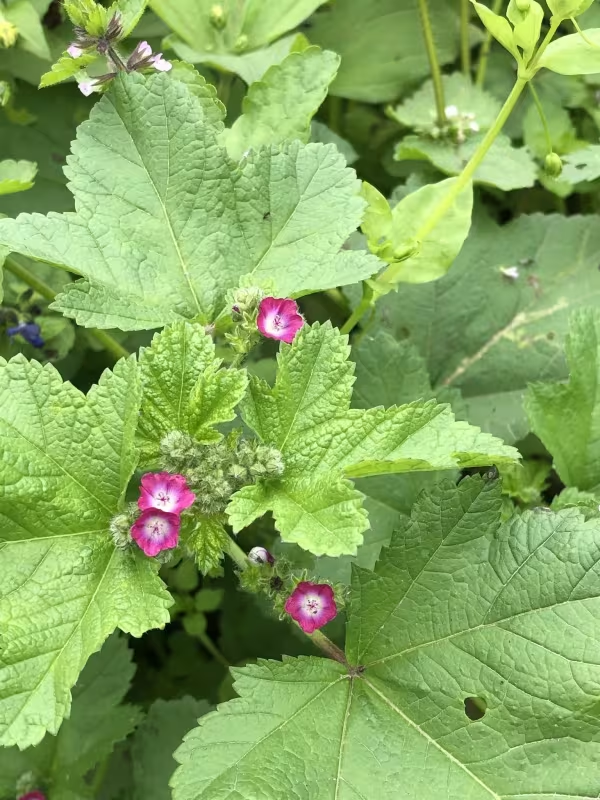
Description
Sowing dates
Fuertesimalva peruviana belongs to the Malvaceae family, native to the high-altitude regions of the Andes. Sowing should be timed to coincide with the onset of the stable warm season to ensure proper germination.
Seeds should be planted at a shallow depth of 1–2 cm. Given their small size, covering them too deeply can prevent successful emergence and reduce overall crop stand density.
Soil preparation involves light tillage to create a fine tilth. This process is essential for establishing good soil-to-seed contact, which accelerates the initial growth phases.
Timing is critical, as the crop requires a specific duration of warmth for vegetative development. Early sowing in protected structures can extend the growing season significantly.
Proper spacing between rows is recommended to allow for equipment passage and adequate airflow during the later stages of plant development, preventing canopy overcrowding.
Growing requirements
The plant thrives in temperate climates with significant diurnal temperature variations, reflecting its Andean origin. It is well-adapted to high-altitude environments with clear skies.
Well-drained, sandy loam soils are ideal for Fuertesimalva. The species is highly sensitive to waterlogging, so soil porosity is a primary requirement for root health.
Full sun exposure is necessary for maximum photosynthetic efficiency. While it can tolerate partial shade, productivity is significantly reduced under limited light conditions.
Moisture management should be focused on preventing extremes. While it handles moderate drought, consistent soil moisture during the flowering phase is beneficial for yields.
Balanced fertilization is advised, emphasizing potassium and phosphorus to support structure and flowering rather than excessive vegetative expansion from high nitrogen.
Main diseases and pests
Common phytosanitary threats include soil-borne fungal pathogens such as Pythium and Rhizoctonia, which are typically encouraged by poor soil drainage and high moisture.
Insect pests, specifically aphids and spider mites, pose a risk to foliage quality. These pests thrive in dry conditions or when plants are stressed by inadequate watering.
Cultural control methods, such as maintaining proper plant spacing and removing crop residues, are vital to preventing the buildup of inoculum and pest populations.
Monitoring the undersides of leaves is a standard practice to detect early pest infestation, allowing for localized treatments rather than blanket chemical applications.
Regular monitoring of soil pH and nutrient status helps maintain plant vigor, making the crop more resilient to naturally occurring pests and secondary infections.